


Coffee is one of the most widely consumed beverages in the world and contains hundreds of biologically active compounds, including caffeine, chlorogenic acids, diterpenes, trigonelline, melanoidins, and multiple polyphenols. These constituents can influence glucose metabolism, inflammation, oxidative stress, liver function, the gut microbiome, and cellular signaling. For this reason, coffee has attracted considerable interest as a potential modifier of cancer risk and prognosis.
For patients with metastatic cancer, however, the clinically relevant question is not whether coffee prevents cancer in otherwise healthy adults. It is whether drinking coffee after a diagnosis of advanced cancer can slow disease progression, improve survival, enhance treatment tolerance, or meaningfully improve quality of life.
The answer is nuanced. Coffee consumption has been associated with favorable outcomes in several observational studies of cancer survivors, with the strongest evidence coming from colorectal cancer. Most notably, a large prospective analysis embedded within a randomized clinical trial found that patients with advanced or metastatic colorectal cancer who drank more coffee experienced longer overall survival and progression-free survival. (1) Nevertheless, coffee itself has not been tested as an anticancer treatment in a randomized trial, and there is insufficient evidence to conclude that coffee improves prognosis across metastatic cancers generally.
Coffee should therefore be regarded as a potentially beneficial dietary exposure—not as a cancer therapy, a substitute for systemic treatment, or a universally appropriate recommendation for every patient.
Coffee Is More Than Caffeine
Coffee and caffeine are often discussed as though they were interchangeable, but this is misleading.
Caffeine is only one component of coffee. Coffee also contains:
Chlorogenic and caffeic acids
Ferulic acid
Trigonelline
Cafestol and kahweol
Melanoidins produced during roasting
Magnesium and other micronutrients
Numerous volatile and nonvolatile phytochemicals
Some epidemiological associations are observed with both caffeinated and decaffeinated coffee, suggesting that non-caffeine constituents may contribute materially to any benefit. This is particularly relevant in colorectal cancer studies, where both caffeinated and decaffeinated coffee have been associated with more favorable outcomes. (2)
Caffeine itself is a central nervous system stimulant and an adenosine-receptor antagonist. It can improve alertness and temporarily reduce perceived fatigue, but it can also worsen insomnia, anxiety, tremor, palpitations, reflux, and diarrhea. Thus, the biological effects of coffee depend on the beverage as a whole, the caffeine dose, preparation method, accompanying additives, timing, and individual tolerance.
The Strongest Clinical Evidence: Metastatic Colorectal Cancer
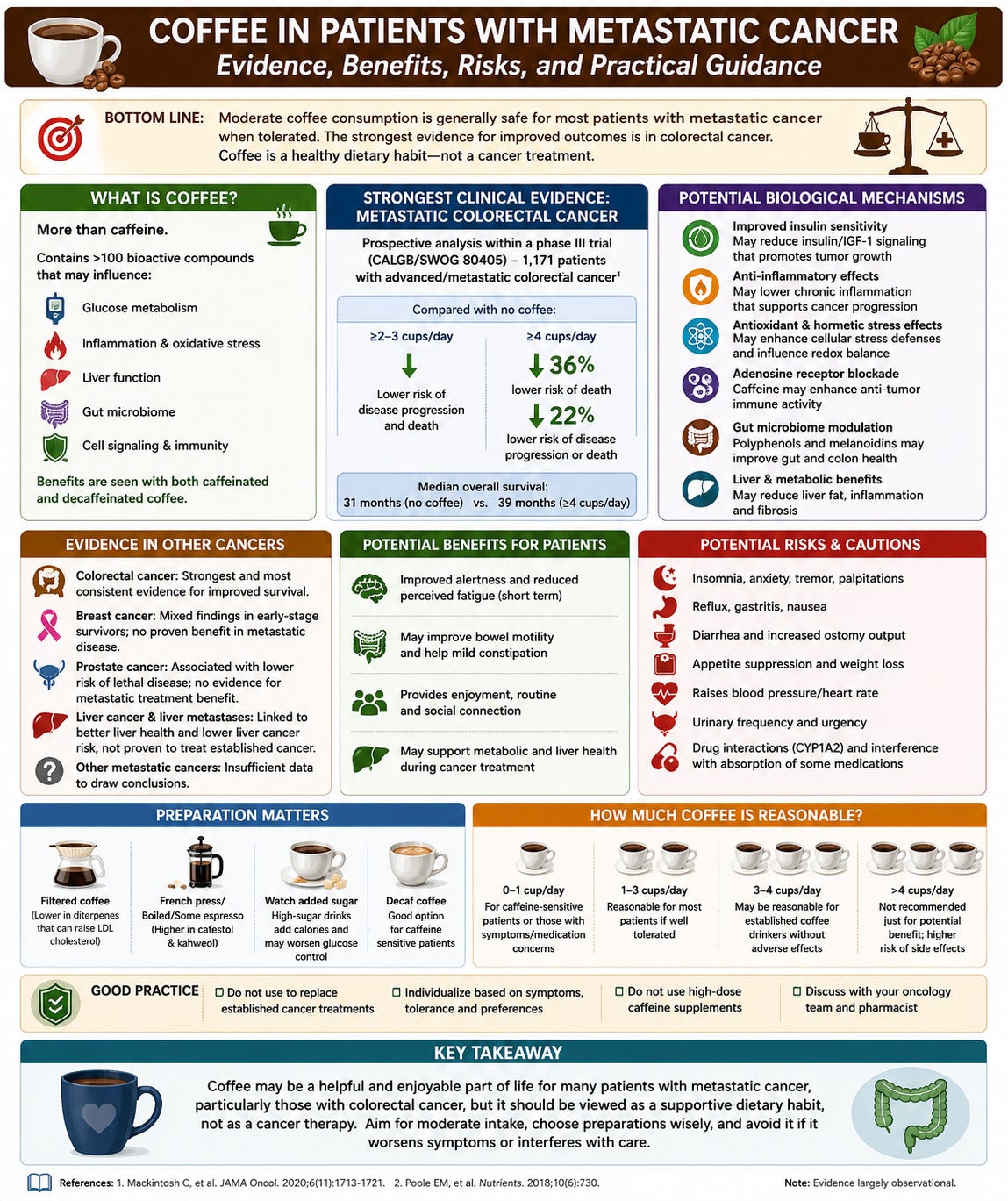
The most important study directly relevant to metastatic disease was published in JAMA Oncology in 2020 by Mackintosh and colleagues.(1) It examined coffee intake among patients participating in CALGB/SWOG 80405, a large phase III clinical trial involving patients with previously untreated, advanced or metastatic colorectal cancer.
Although the underlying treatment trial was randomized, coffee consumption was not. Coffee intake was assessed through a dietary questionnaire, making the coffee analysis prospective but observational.
Study population and design
The analysis included 1,171 patients with advanced or metastatic colorectal cancer. Participants reported their intake of caffeinated and decaffeinated coffee around the time of study enrollment. Investigators then evaluated associations between coffee consumption and:
Overall survival
Progression-free survival
Disease progression
Death from any cause
The analyses adjusted for multiple potential confounders, including age, sex, performance status, treatment arm, smoking, alcohol use, physical activity, body mass index, and other dietary and clinical factors. (1)
Principal findings
Higher coffee consumption was associated with better outcomes in a dose-responsive pattern.
Compared with patients who drank no coffee, those consuming two to three cups daily had lower risks of disease progression and death. Patients consuming four or more cups daily appeared to experience the greatest benefit.
In the highest-consumption group, coffee intake was associated with an approximately 36% lower risk of death and a 22% lower risk of disease progression or death after multivariable adjustment. Both caffeinated and decaffeinated coffee showed favorable associations, again suggesting that caffeine alone was unlikely to explain the findings.
Reported median overall survival was approximately 31 months among nondrinkers and about 39 months among those consuming at least four cups daily. The study therefore provides unusually strong observational evidence that coffee consumption may be associated with slower progression and longer survival in metastatic colorectal cancer. (1)
Why this study is important
This analysis is more compelling than a typical population survey because all participants had advanced colorectal cancer, were treated within a well-characterized clinical trial, and had detailed information available regarding treatment, clinical characteristics, and outcomes.
Nevertheless, it remains observational. Patients were not randomly assigned to drink coffee. Coffee drinkers may differ from nondrinkers in unmeasured ways, including appetite, functional status, socioeconomic circumstances, comorbid disease, treatment tolerance, or overall wellness. Reverse causation is also possible: patients with more aggressive disease, gastrointestinal symptoms, or declining health may reduce or stop drinking coffee.
Accordingly, the study demonstrates an association, not proof that coffee itself prolonged survival.
Evidence in Nonmetastatic Colorectal Cancer
The metastatic colorectal cancer findings are consistent with earlier work in patients with stage III disease.
In a prospective cohort embedded within a chemotherapy trial, patients who consumed four or more cups of coffee daily after diagnosis had lower rates of cancer recurrence and death than those who did not drink coffee. (3) Another prospective study found that at least four cups daily was associated with a 52% lower risk of colorectal cancer-specific mortality compared with abstinence. Both caffeinated and decaffeinated coffee were associated with favorable outcomes. (2)
More recent European cohort data have likewise associated higher coffee consumption with reduced recurrence and mortality after colorectal cancer, although the apparent mortality relationship may be nonlinear, with the greatest benefit often seen around three to five cups daily rather than at unlimited intake. (4)
A 2025 meta-analysis of coffee and tea consumption among cancer patients concluded that coffee was associated with improved survival overall, with the most consistent protective association observed in colorectal cancer. The authors nevertheless emphasized that evidence in other tumor types remains limited and heterogeneous.(5)
Taken together, colorectal cancer represents the strongest clinical setting in which habitual coffee consumption has been repeatedly linked to improved prognosis.
Breast Cancer
Evidence in breast cancer is less consistent and generally relates to early-stage survivors rather than patients with metastatic disease.
Some prospective studies have reported that women drinking two to three or more cups daily after breast cancer diagnosis experienced lower breast cancer-specific or overall mortality. One analysis cited reductions of approximately 24% to 25% in selected higher-intake groups. However, other breast cancer survivor cohorts found no significant association between coffee intake and recurrence, survival, fatigue, anxiety, depression, or insomnia. (6)
Experimental studies have proposed several mechanisms by which caffeine and caffeic acid could influence breast cancer cells, including effects on estrogen receptor signaling, cell-cycle control, and tumor growth. (7) Coffee intake has also been associated in observational work with fewer early events among tamoxifen-treated patients. These findings are hypothesis-generating, but they do not establish that coffee improves outcomes in metastatic breast cancer.
At present, there is insufficient clinical evidence to recommend increased coffee consumption as a disease-modifying intervention in metastatic breast cancer.
Prostate Cancer
Coffee consumption has repeatedly been associated with a lower incidence of lethal, high-grade, or fatal prostate cancer in prospective studies and meta-analyses. Some studies suggest that non-caffeine components may be responsible because similar associations have been observed with decaffeinated coffee. (8)
However, prevention of lethal disease and treatment of established metastatic prostate cancer are fundamentally different questions. There is currently no high-quality evidence demonstrating that initiating coffee consumption after the development of metastatic prostate cancer delays progression or extends survival.
Coffee can therefore be considered generally compatible with prostate cancer care when tolerated, but it should not be portrayed as a treatment for metastatic disease.
Liver Cancer and Liver Metastases
Coffee has one of its strongest epidemiological associations with reduced development of hepatocellular carcinoma and chronic liver disease. Each additional daily cup has been associated in meta-analyses with a lower risk of liver cancer, and coffee consumption is consistently associated with improved liver enzyme profiles and lower rates of fibrosis and cirrhosis. (9)
These findings are biologically relevant to patients with chronic liver disease and may be relevant to patients whose systemic therapy places stress on hepatic function. However, evidence that coffee treats established hepatocellular carcinoma or improves outcomes from liver metastases is lacking.
It is important not to extrapolate from prevention data to metastatic disease. Coffee may support general hepatic health, but it has not been shown to shrink liver metastases or replace oncologic treatment.
Other Metastatic Cancers
For lung, pancreatic, ovarian, renal, melanoma, and most hematologic malignancies, there are insufficient data evaluating coffee intake after metastatic diagnosis. Studies of cancer incidence do not answer the question of prognosis once metastatic disease is established.
A broad meta-analysis suggesting improved survival among coffee-drinking cancer patients should therefore be interpreted cautiously because it combines heterogeneous tumor types, stages, exposure definitions, and follow-up methods. The signal appears driven substantially by colorectal cancer, while evidence for many other cancers remains sparse. (5)
The most accurate conclusion is that coffee may be associated with improved outcomes in selected cancers, but a generalized survival benefit across all metastatic disease has not been established.
Potential Biological Mechanisms
Several mechanisms could plausibly explain the favorable associations observed in colorectal and other cancers.
Improved insulin sensitivity
Hyperinsulinemia and insulin resistance can activate insulin and IGF-1 signaling, promoting PI3K–AKT–mTOR activity, cellular proliferation, and resistance to apoptosis. Coffee consumption has been associated with improved insulin sensitivity and a reduced risk of type 2 diabetes, potentially reducing insulin-driven tumor signaling. This mechanism is particularly relevant to colorectal, endometrial, hepatic, and pancreatic cancer biology. (10)
Anti-inflammatory effects
Coffee polyphenols may reduce systemic inflammatory signaling and influence pathways involving NF-κB, IL-6, TNF-α, and C-reactive protein. Chronic inflammation supports angiogenesis, stromal remodeling, immune evasion, and metastatic progression. A modest reduction in inflammatory tone could therefore improve the metabolic and immune environment in which tumors grow.
Antioxidant and pro-oxidant effects
Coffee contains substantial quantities of antioxidant compounds, but describing coffee simply as an antioxidant is incomplete. Polyphenols can also produce hormetic effects by activating endogenous stress-response pathways, including Nrf2-dependent antioxidant defenses. This may improve normal-cell resilience while influencing redox-sensitive signaling within tumors.
Effects on adenosine signaling and immunity
Caffeine antagonizes adenosine receptors, including A2A receptors. Tumors often accumulate extracellular adenosine, which suppresses cytotoxic T cells and natural killer cells. Experimental data suggest that caffeine-mediated adenosine blockade could enhance antitumor immunity, although typical dietary intake has not been proven to reproduce the effects of targeted A2A-receptor drugs in patients. Recent preclinical colorectal cancer research also suggests caffeine may enhance CD8-positive T-cell activity and immunotherapy responses through modulation of the kynurenine pathway, but this remains experimental. (11)
Cell-cycle and DNA-repair effects
At high laboratory concentrations, caffeine can inhibit ATM and ATR checkpoint signaling, alter DNA-damage responses, and sensitize some cancer cells to chemotherapy or radiation. These findings generated experimental approaches known as caffeine-potentiated chemotherapy, particularly in sarcoma. However, the doses and exposures used experimentally are often much higher than those achieved through normal coffee drinking, and this work should not be used to claim that ordinary coffee enhances chemotherapy. (12)
Gut microbiome effects
Coffee polyphenols and melanoidins reach the colon, where they may alter microbial composition, fermentation, bile-acid metabolism, and epithelial barrier function. This is a plausible explanation for the particularly consistent associations observed in colorectal cancer.
Liver and metabolic effects
Coffee may reduce hepatic fat accumulation, inflammation, and fibrosis while favorably influencing glucose metabolism. These effects may improve general metabolic resilience in patients receiving prolonged systemic therapy, although they do not constitute evidence of direct antitumor action.
Coffee Versus Caffeine Supplements
The observational evidence relates mainly to coffee as a beverage, not purified caffeine tablets, powders, or high-caffeine energy drinks.
This distinction matters because:
Decaffeinated coffee has shown favorable associations in several studies.
Coffee contains many potentially beneficial phytochemicals.
Caffeine supplements can produce much higher and more rapid peak concentrations.
Energy drinks often contain substantial sugar and additional stimulants.
Concentrated caffeine products carry greater risks of tachycardia, insomnia, anxiety, and toxicity.
There is no evidence that caffeine pills improve metastatic cancer outcomes. Patients should not attempt to reproduce laboratory anticancer effects by taking high-dose caffeine.
Potential Clinical Benefits Beyond Tumor Control
Even if coffee does not directly alter cancer progression, modest use may provide symptomatic benefits for selected patients.
Alertness and fatigue
Caffeine can temporarily improve alertness, attention, and perceived energy. In a patient with mild daytime fatigue, one morning cup may improve function and quality of life.
However, cancer-related fatigue is often driven by anemia, inflammation, sleep disruption, depression, endocrine dysfunction, malnutrition, infection, medication effects, or progressive disease. Coffee may temporarily mask fatigue without addressing its cause.(13)
Mood and routine
Coffee can provide pleasure, social engagement, and a sense of normality. These benefits should not be dismissed in advanced cancer care, where maintaining familiar rituals and quality of life can be meaningful.
Bowel function
Coffee stimulates colonic motility in some individuals and may help mild opioid-related constipation. In others it can worsen diarrhea, cramping, urgency, or fecal incontinence.
Its use should therefore be individualized according to symptoms.
Potential Harms in Metastatic Disease
Patients with metastatic cancer differ from healthy adults. A quantity of coffee tolerated before diagnosis may become problematic during treatment.
Sleep disturbance
Poor sleep can worsen cancer-related fatigue, cognitive dysfunction, pain sensitivity, anxiety, and quality of life. Caffeine consumed later in the day may interfere with sleep initiation and sleep depth. Cancer-fatigue guidelines emphasize avoiding caffeine near bedtime as part of sleep hygiene.
Anxiety, tremor, and palpitations
Caffeine can worsen anxiety, panic symptoms, tremor, tachycardia, and palpitations. These effects may be particularly troubling in patients receiving corticosteroids, stimulants, thyroid replacement, sympathomimetic decongestants, or medications that prolong adrenergic activation.
Gastroesophageal reflux and gastritis
Coffee may worsen reflux, dyspepsia, nausea, mucositis-related discomfort, or gastritis. Patients receiving steroids, NSAIDs, or treatments associated with upper gastrointestinal irritation may tolerate it poorly.
Diarrhea and ostomy output
Coffee may stimulate bowel motility and increase stool or ostomy output. This can be clinically important in patients receiving irinotecan, fluoropyrimidines, immune checkpoint inhibitors, antibiotics, pelvic radiation, or targeted therapies that cause diarrhea.
Appetite and cachexia
Caffeine may suppress appetite in some individuals. In a patient with cancer cachexia, early satiety, nausea, or involuntary weight loss, coffee should not displace calorie- and protein-containing food.
A large black coffee in place of breakfast may be metabolically undesirable even if coffee itself is not harmful.
Blood pressure and arrhythmias
Caffeine can transiently raise blood pressure and heart rate. Patients with uncontrolled hypertension, atrial fibrillation, significant ventricular arrhythmias, ischemic heart disease, or cardiotoxic treatment exposure may require lower intake.
Urinary symptoms
Coffee can aggravate urinary frequency, urgency, nocturia, bladder pain, or treatment-related cystitis.
Bone health
Coffee in moderate amounts is unlikely to meaningfully harm bone in patients with adequate calcium and vitamin D intake, but excessive intake that displaces nutrition may be undesirable in patients with osteoporosis, androgen-deprivation therapy, aromatase-inhibitor exposure, or bone metastases.
Drug–Treatment Interactions
For most anticancer treatments, moderate coffee consumption has no established clinically important interaction. Nevertheless, several cautions are appropriate.
Caffeine is metabolized primarily by CYP1A2. Drugs that inhibit CYP1A2 can raise caffeine exposure, while inducers can lower it. Clinically significant caffeine interactions have been reported with several non-oncology medications, and cancer patients often take complex multidrug regimens. (14)
Certain tyrosine kinase inhibitors and supportive medications also involve CYP1A2 metabolism, but evidence that ordinary coffee intake meaningfully alters their efficacy is limited. A pharmacist should review high caffeine consumption when a patient is taking drugs with a narrow therapeutic index or prominent CYP1A2 dependence.
Preclinical data on paclitaxel are conflicting. One laboratory study found that caffeine reduced paclitaxel-induced apoptosis and antitumor activity, while other experimental work has reported synergy. There is no clinical evidence showing that normal dietary coffee consumption reduces paclitaxel effectiveness, but the conflicting laboratory literature argues against recommending high-dose caffeine supplements during paclitaxel therapy. (15)
Coffee can also interfere with absorption of certain non-cancer medications when taken simultaneously. As a practical precaution, oral anticancer drugs should be taken exactly as directed, usually with water, rather than washed down with coffee unless the prescribing information specifically permits it.
Coffee Preparation Matters
The potential health effects of coffee depend partly on how it is prepared.
Added sugar
High-sugar coffee drinks can contain substantial glucose, fructose, and calories. For patients with insulin resistance, diabetes, obesity, or steroid-induced hyperglycemia, heavily sweetened coffee may negate many of the metabolic advantages attributed to coffee itself.
Cream and caloric additives
Cream may be useful for a cachectic patient needing calories, but repeated high-calorie specialty beverages can be counterproductive in patients with metabolic syndrome. The appropriate choice depends on the clinical context.
Filtered versus unfiltered coffee
Paper-filtered coffee removes much of the diterpenes cafestol and kahweol, which can raise LDL cholesterol. French press, boiled coffee, and some espresso preparations retain more of these compounds. For patients with cardiovascular risk, filtered coffee may be preferable.
Decaffeinated coffee
Decaffeinated coffee retains many polyphenols and may be a useful option for patients with insomnia, palpitations, anxiety, reflux, or urinary symptoms. Observational colorectal studies suggest that any favorable association is not confined to caffeinated coffee. (2)
How Much Coffee Is Reasonable?
There is no evidence-based cancer-specific dose.
For healthy adults, up to approximately 400 mg of caffeine daily—roughly four to five standard eight-ounce cups, depending on strength—is commonly considered an upper general limit. Patients with metastatic disease often require substantially less because of frailty, polypharmacy, insomnia, cardiovascular disease, gastrointestinal symptoms, or reduced tolerance. U.S. Food and Drug Administration (FDA). Spilling the Beans: How Much Caffeine is Too Much? cites 400 mg/day — roughly four to five cups of coffee — as an amount “not generally associated with dangerous, negative effects” for healthy adults.
A practical approach is:
Zero to one cup daily when the patient is caffeine-sensitive, cachectic, anxious, sleeping poorly, experiencing diarrhea, or taking interacting medications.
One to three cups daily for most patients who enjoy coffee and tolerate it.
Three to four cups daily may be reasonable for established coffee drinkers without adverse effects, particularly in colorectal cancer, but should not be prescribed as anticancer therapy.
More than four cups daily should not be encouraged solely because observational studies showed lower risk at higher intake. Higher intake increases the likelihood of insomnia, tremor, palpitations, reflux, and appetite suppression.
Cup size is important. A large commercial coffee may contain the caffeine equivalent of several conventional cups.
A Practical Framework for Metastatic Cancer Patients
Coffee is most likely to be reasonable when the patient:
Already enjoys it
Has stable weight and appetite
Does not have troublesome reflux or diarrhea
Sleeps well
Has no uncontrolled arrhythmia or hypertension
Is not using it to replace meals or hydration
Is not taking high-dose caffeine supplements
Has had the medication list reviewed when intake is high
Coffee should be reduced or avoided when it worsens:
Insomnia
Anxiety
Palpitations
Tremor
Reflux
Nausea
Diarrhea
Ostomy output
Urinary urgency
Appetite loss
Cachexia
The decision should prioritize quality of life and treatment tolerance over speculative anticancer benefit.
What Coffee Cannot Be Claimed to Do
Based on current evidence, it would be inappropriate to claim that coffee:
Treats metastatic cancer
Shrinks tumors
Replaces chemotherapy, immunotherapy, endocrine therapy, radiation, or surgery
Improves survival in all metastatic malignancies
Enhances every chemotherapy regimen
Is beneficial at unlimited doses
Is equivalent to concentrated caffeine therapy
Should be started by every patient with metastatic disease
The strongest available evidence is an observational association in colorectal cancer, not proof of therapeutic efficacy.
Overall Interpretation
Coffee is an unusually interesting dietary exposure because favorable associations have been reported across metabolic disease, liver disease, overall mortality, and several cancers. Among patients already diagnosed with cancer, the most persuasive evidence relates to colorectal cancer, including a prospective study of more than 1,100 patients with advanced or metastatic disease in which higher coffee intake was associated with longer overall and progression-free survival. (1)
The biological rationale is plausible. Coffee may improve insulin sensitivity, reduce inflammatory signaling, influence the gut microbiome, modify adenosine-mediated immune suppression, and supply polyphenols that alter cellular stress responses. Yet these mechanisms remain incompletely defined, and observational associations may reflect residual confounding or reverse causation.
For most patients with metastatic cancer, moderate coffee consumption appears acceptable when well tolerated. It may improve alertness, enjoyment, routine, and possibly bowel function. For patients with colorectal cancer, the observational evidence is sufficiently encouraging that there is no reason to discourage moderate consumption in the absence of contraindications.
However, coffee should remain in its proper place: a potentially beneficial component of diet and quality of life, not a proven anticancer therapy.
Bottom line
The evidence can be summarized as follows:
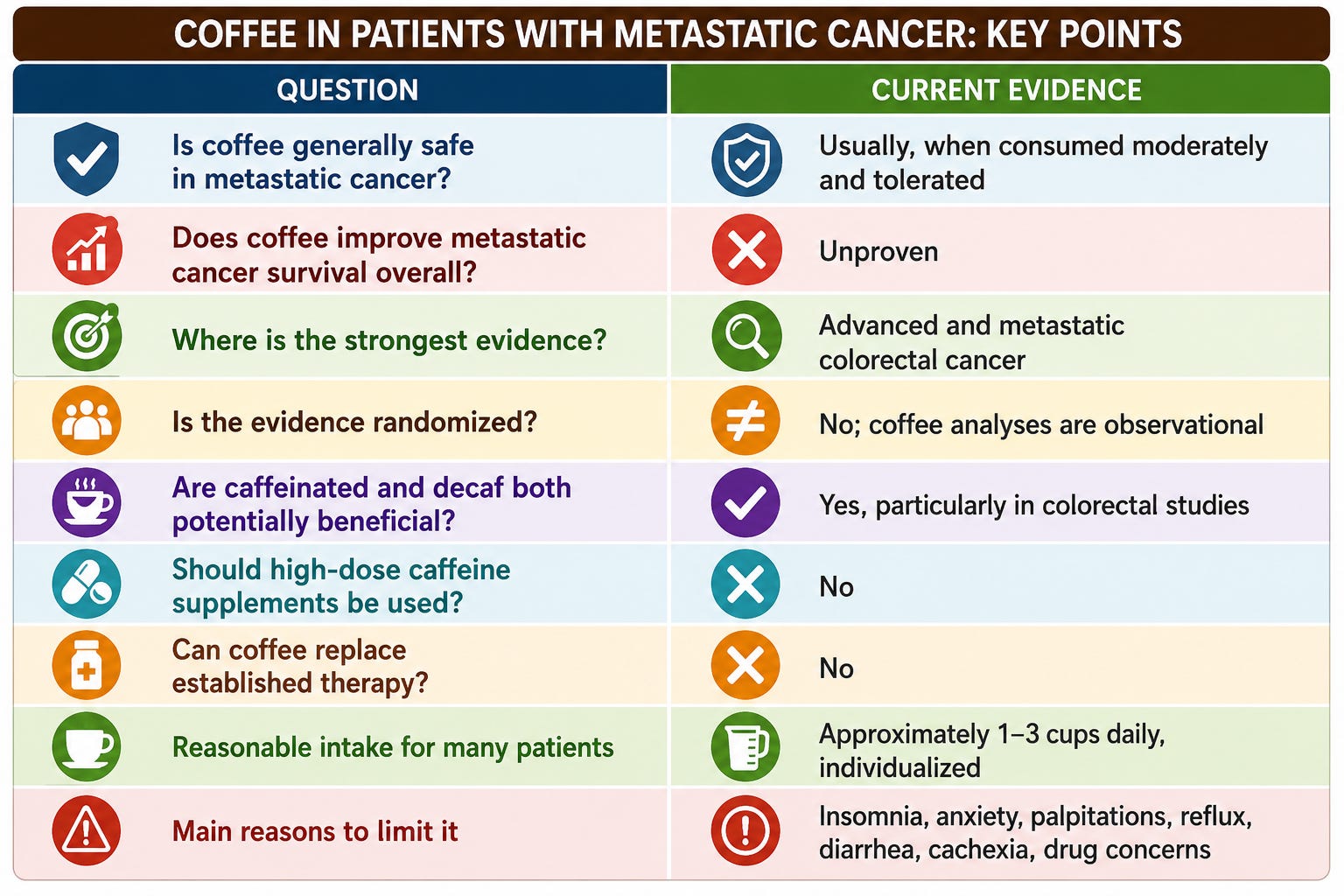
Coffee may be a helpful and enjoyable dietary habit for selected patients with metastatic disease, especially those with colorectal cancer, but recommendations should remain individualized and evidence-based.
Practical recommendation
For patients with metastatic cancer who enjoy coffee and have no contraindications (such as uncontrolled arrhythmias, severe gastroesophageal reflux, or significant caffeine sensitivity), moderate coffee consumption (approximately 2–4 cups per day) appears reasonable and may provide modest health benefits. It should be viewed as part of an overall healthy dietary pattern rather than as an anticancer therapy.
From the perspective of the Metabolic Trap framework, coffee is best considered a supportive metabolic adjunct rather than a core therapeutic intervention. Its anti-inflammatory effects, modest AMPK activation, improvement in insulin sensitivity, antioxidant polyphenols, and favorable effects on liver health align with several components of the metabolic approach to cancer. However, the current evidence is observational, and there are no randomized trials demonstrating that coffee itself improves survival in metastatic pancreatic cancer or most other advanced malignancies.
If you’ve found value in this work, I’d encourage you to consider upgrading to a paid subscription. Your support allows me to continue researching, writing, and sharing these evolving insights—free from institutional constraints and focused entirely on what matters most: the patient. It also gives you access to deeper analyses, practical protocols, and a more direct line of communication as this field continues to move forward.

Guillermou, I agree with you completely. It makes absolutely no sense to administer coffee rectally. Coffee is meant to be enjoyed orally, as it has been for centuries. There is no convincing scientific evidence that coffee enemas provide benefits beyond those of drinking coffee, and they carry unnecessary risks.
Thanks. I am not a fan of coffee enemas.