

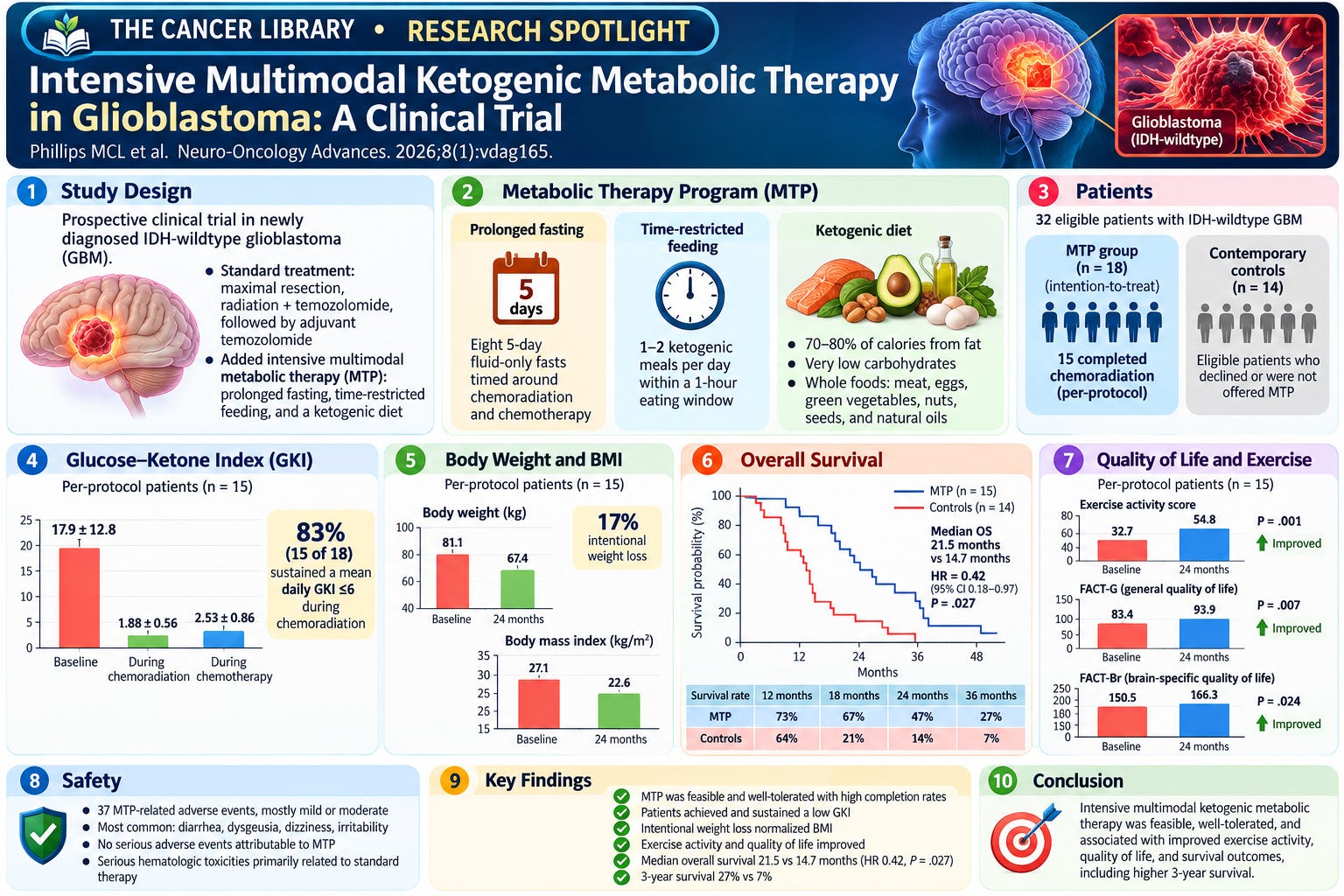
A recently published clinical trial from New Zealand offers the most rigorous test to date of intensive metabolic therapy in glioblastoma. In this study, Phillips and colleagues combined standard chemoradiation with repeated five-day fasts and a time-restricted ketogenic diet in patients with newly diagnosed disease (1). The results complement, and put into practice, many of the principles discussed in my previous post, “The Ketogenic Diet and Cancer: Changing the Metabolic Terrain.”
The study in one sentence. Among patients who completed chemoradiation on the program, median overall survival was 21.5 months compared with 14.7 months in a contemporary control group, and 27% were alive at three years compared with 7%, with no serious adverse events attributed to the metabolic intervention.
Why Glioblastoma Needs New Approaches
Glioblastoma is the most common and most aggressive primary malignant brain tumor in adults. Under the 2021 WHO classification, the term is now reserved for IDH-wildtype tumors, which account for about 90% of cases previously diagnosed as glioblastoma (2). Since 2005, standard treatment has consisted of maximal safe surgical resection followed by six weeks of radiotherapy with concurrent temozolomide and then six cycles of adjuvant temozolomide (3). Despite this intensive regimen, median overall survival for IDH-wildtype disease remains only about 11–14 months, and few patients survive beyond three years (4).
Two decades have passed with little improvement in these figures. That lack of progress is one reason why metabolic approaches, once considered peripheral, are attracting serious clinical interest.
The Metabolic Rationale
Glioblastoma cells display many of the metabolic abnormalities discussed throughout this series. They rely heavily on glucose, fermenting it to lactate through glycolysis, and on glutamine, and they show structurally and functionally abnormal mitochondria with impaired oxidative phosphorylation (5,6). Growth signaling through insulin, IGF-1, and mTOR is also frequently enhanced.
Ketogenic metabolic therapy aims to exploit these vulnerabilities. Fasting and a ketogenic diet both lower blood glucose and insulin while raising ketones, which healthy brain tissue can use efficiently but which many glioblastoma cells appear less able to oxidize (7). The combined effect is captured in a single number, the glucose–ketone index (GKI): blood glucose divided by blood β-hydroxybutyrate, both in mmol/L (8).
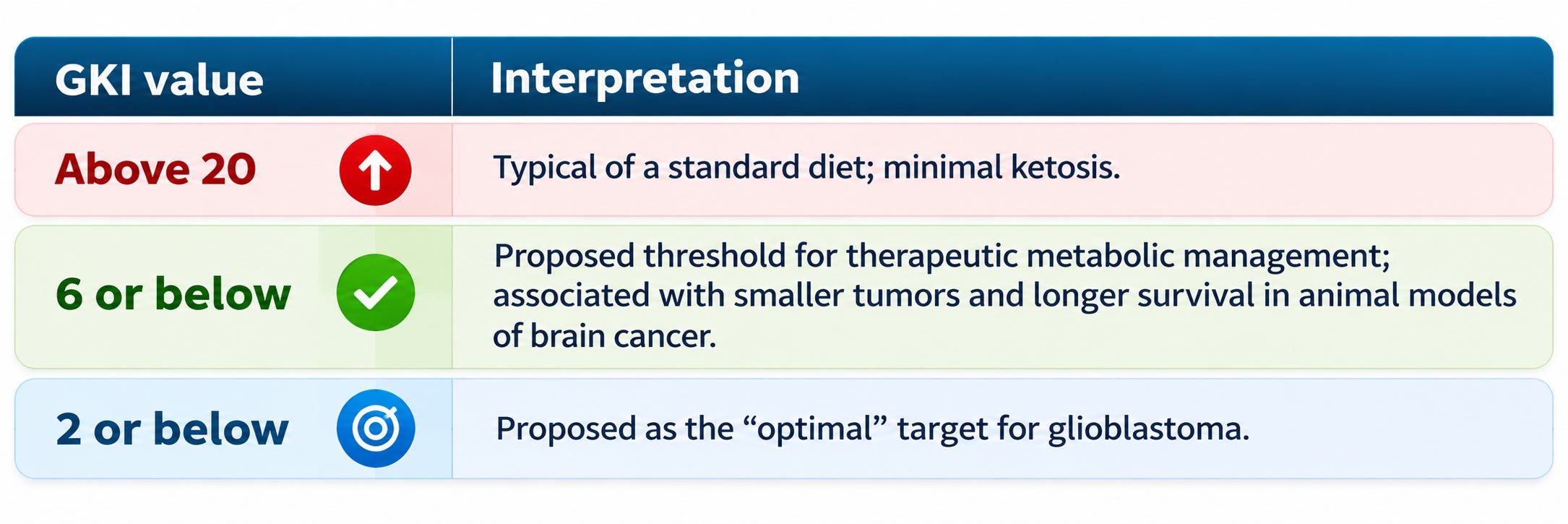
Earlier human studies were encouraging but limited. Most were short, often 12 weeks or less, relied on diet rather than fasting, included mixed tumor types, and found that many patients struggled to sustain a GKI of 6 or below (9,10). None had compared survival against a contemporary control group receiving the same standard treatment. This trial was designed to address those gaps.
The Study at a Glance
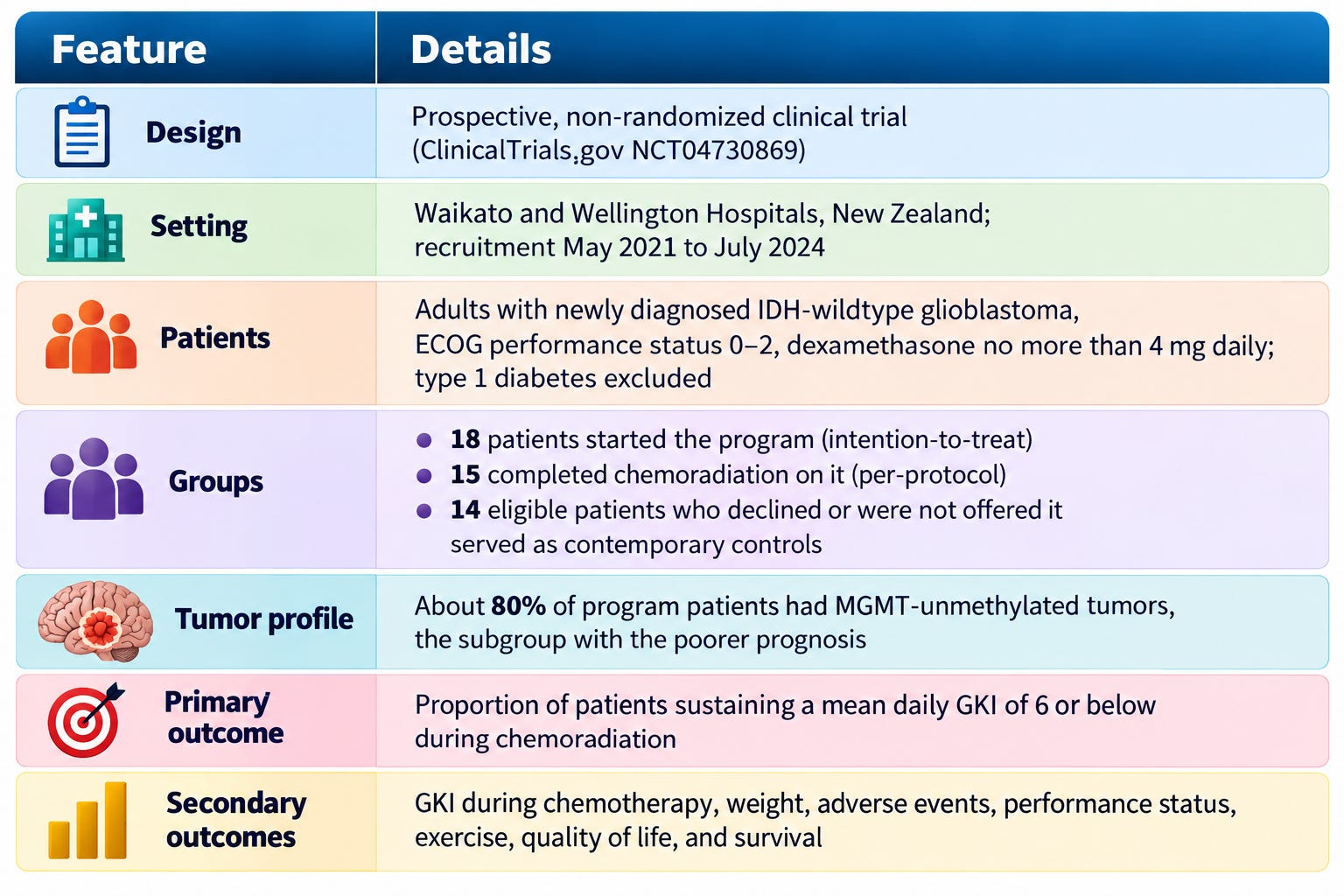
The Intervention: A “Press-Pulse” Strategy
The metabolic therapy program was built on the press-pulse concept: a continuous, low-intensity metabolic stress (the press) punctuated by periodic, high-intensity stresses (the pulses) (11). The pulses were timed to coincide with radiation and chemotherapy, when differential stress resistance, the idea that fasting protects normal cells while sensitizing cancer cells, would be expected to matter most (12).
The pulse: prolonged fasting
Patients completed eight five-day, fluid-only fasts, taking only water, salt, tea, coffee, and a magnesium supplement. The fasts were precisely timed:
The first began four days before chemoradiation started.
The second took place during the third week of chemoradiation.
The remaining six each began four days before a five-day course of adjuvant temozolomide.
According to the authors, fasts of this length lower blood glucose by roughly 30–40% and glutamine by 15–20%, reducing both of the main fermentable fuels on which glioblastoma cells depend.
The press: a time-restricted ketogenic diet
On all other days, patients ate one or two meals a day, each within a one-hour window, and fasted for the rest of the day. The meals were self-prepared and composed, by weight, of about 60% fat (70–80% of energy), 30% protein, 5% fiber, and 5% net carbohydrate, drawn mainly from meat, eggs, green vegetables, nuts, seeds, and natural oils, with a daily multivitamin. Patients were told to eat until satiated.
Support and monitoring
Patients measured their blood glucose and ketones at bedtime using a home meter and recorded them in a daily log. They and a nominated partner received a program booklet with recipes and a structured series of timed emails offering practical guidance. Notably, the program did not involve a dietitian, because it was primarily fasting-based. After standard treatment ended, patients could choose whether to continue.
What the Trial Found
Feasibility and metabolic control
The program met its primary outcome. Of the 18 patients who started it, 15 (83%) sustained a mean daily GKI of 6 or below throughout chemoradiation, and 11 of these maintained that level through chemotherapy.
The degree of metabolic control was striking. Among per-protocol patients, the GKI fell from 17.9 at baseline to 1.88 during chemoradiation and 2.53 during chemotherapy, averaging 2.82 over 24 months. Blood glucose fell from about 6.5 to about 5 mmol/L, while ketones rose from 0.4 to between 2 and 3 mmol/L. This was achieved even though patients were receiving dexamethasone, a steroid that raises blood glucose and has been linked to shorter survival in glioblastoma (13). The program patients also required relatively little of it, averaging 0.57 mg daily during chemoradiation compared with 1.25 mg in controls.
Treatment adherence improved as well. 73% of program patients completed all six cycles of chemotherapy, compared with 50% of controls and 47% in the original trial that established the standard regimen (3). All 15 per-protocol patients continued time-restricted eating after completing chemotherapy.
Safety and tolerability
Twice as many adverse events were attributed to standard treatment (74) as to the metabolic program (37); a further 74 were attributed to neither or were of uncertain cause. Events attributed to the program were mild or moderate, most commonly diarrhea, usually due to the magnesium supplement and resolving within a day or two of stopping it, along with altered taste, dizziness, and irritability.
There were eight serious events in five patients, but none was attributed to the metabolic program. Serious blood-count toxicities such as lymphopenia, neutropenia, and thrombocytopenia were attributed to chemoradiation. The most serious event, recurrent grade 4 hyponatremia, occurred in a patient with extensive multifocal tumor and brainstem compression, and its cause was uncertain.
Weight loss
The program’s major physiological consequence was substantial weight loss. Mean body weight fell by 17%, from 81 to 67 kg, and body mass index fell from 27.1, in the overweight range, to a normal 22.6. Four patients (27%) lost more than 20% of their body weight, which is formally classified as a serious adverse event.
The authors argue that this weight loss was intentional and differs from the involuntary wasting of cancer cachexia, noting that all four patients who lost more than 20% survived beyond 24 months. That interpretation is plausible in a cohort that began overweight, but it is not established, and it sits in tension with nutritional guidelines that warn against energy restriction in patients with cancer (14,15). Muscle mass was not directly measured.
Function and quality of life
Physical activity and quality of life typically decline during glioblastoma treatment. In this trial they improved. Among per-protocol patients:
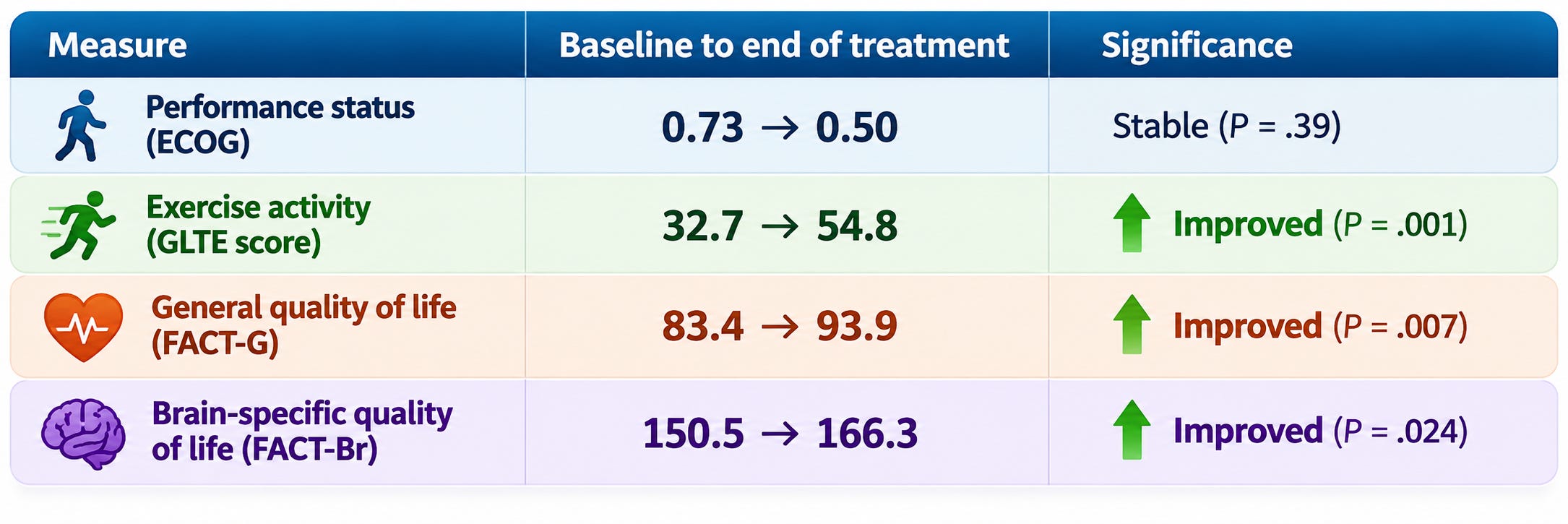
Survival
The survival results have attracted the most attention. Among patients who completed chemoradiation on the program, median overall survival was 21.5 months versus 14.7 months in contemporary controls, corresponding to a 58% lower risk of death.
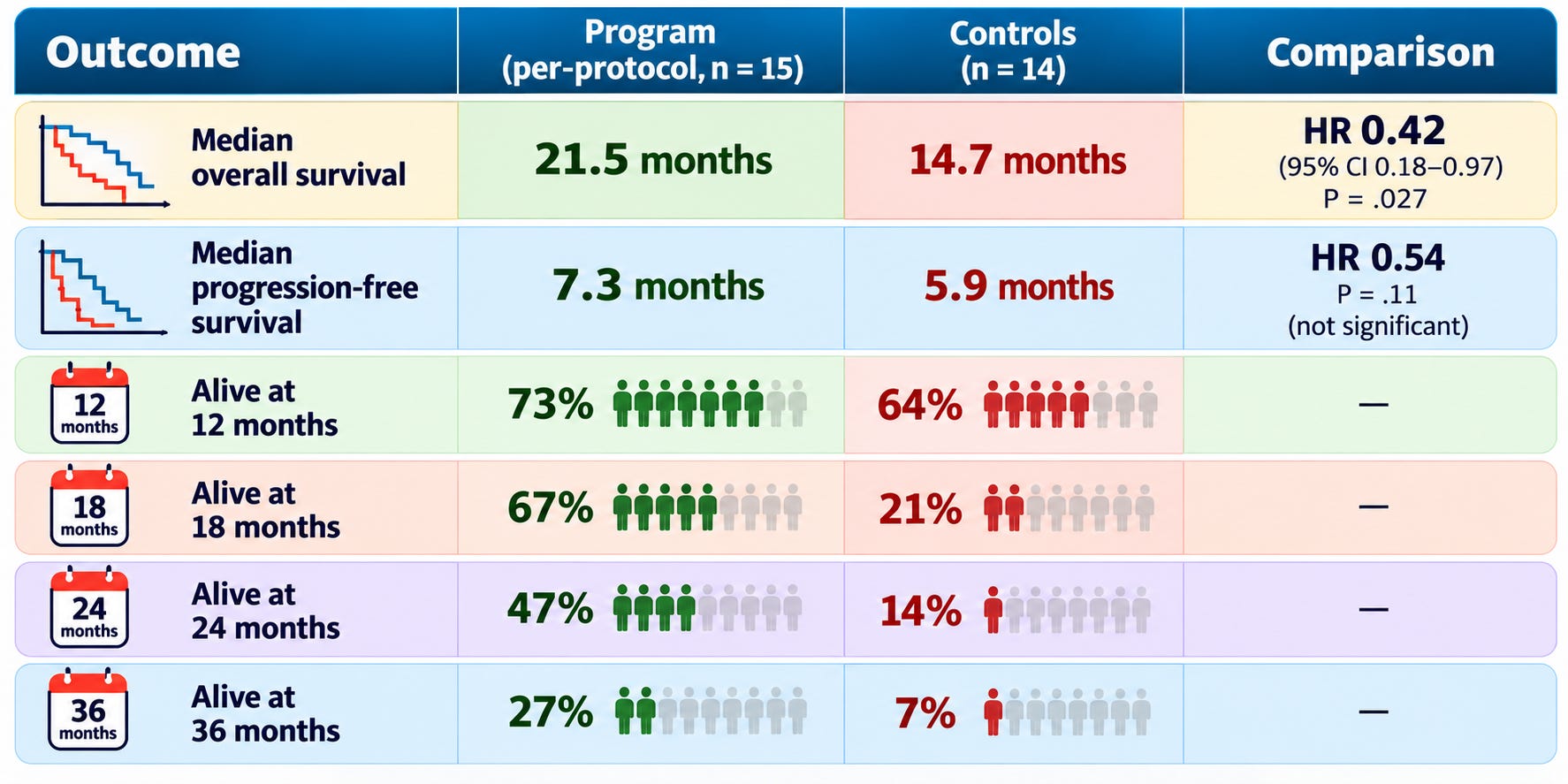
Three features of these results stand out. First, the survival curves were similar for the first year and separated only afterwards. Second, four of the 15 program patients survived more than three years, three of them with no imaging evidence of tumor, whereas the single control patient to reach three years later died. Third, the program patients outperformed their own predicted survival of about 13 months, calculated from a validated nomogram (16), while the controls matched theirs. The two groups also received a similar number of second-line treatments, making later therapy an unlikely explanation.
When all 18 patients who started the program were included, however, median survival was 18.9 months, and the difference from controls was not statistically significant (HR 0.51, 95% CI 0.23–1.13, P = .073).
The patients who did poorly
Four program patients died within 12 months. All had MGMT-unmethylated tumors with high-risk features: multifocal disease, spread through the cerebrospinal fluid after surgical entry into the ventricles, Lynch syndrome, or brainstem involvement. Importantly, these four also had a higher average GKI during chemoradiation than the other 11 (2.90 versus 1.65), including the three highest values in the trial. This observation is consistent with the hypothesis that the depth of metabolic control matters, and that a GKI of 2 or below may be the relevant target (7), although it cannot separate the effect of the GKI from that of more aggressive disease.
Why This Study Matters
This trial moves ketogenic metabolic therapy beyond animal experiments, case reports, and short dietary feasibility studies. It shows, for the first time in a homogeneous group of newly diagnosed IDH-wildtype glioblastoma patients, that:
An intensive program combining ketogenic nutrition, time-restricted eating, and strategically timed prolonged fasting can sustain deep metabolic ketosis throughout the eight to nine months of standard treatment.
Most motivated patients can adhere to it, and it can be delivered alongside chemoradiation without adding serious toxicity.
It is associated with better, not worse, quality of life and physical activity, and with higher rates of chemotherapy completion.
It is accompanied by a survival signal large enough to justify a definitive randomized trial.
The GKI also proved to be a practical, objective measure of adherence, far more reliable than self-reported dietary compliance, and one that can be monitored at home.
A recent Japanese pilot study, which linked GKI values in the therapeutic range with improved outcomes in high-grade glioma patients receiving a ketogenic diet with bevacizumab, adds further support to this line of investigation (17).
Why It Does Not Yet Prove Efficacy
The survival findings should be regarded as hypothesis-generating rather than definitive evidence of an anticancer effect. The authors themselves reach this conclusion and call for larger controlled trials. The main limitations are these:
It was small and not randomized. Only 18 patients started the program. The controls were patients who declined it or were not offered it, so the two groups may differ in ways that affect survival.
The groups were not perfectly balanced. Controls were on average about eight years older (63.9 versus 55.8 years), and age is a strong predictor of outcome in glioblastoma. There were also differences in sex and tumor location. The hazard ratios were not adjusted for age, MGMT status, extent of resection, or performance status.
The significant result depends on the per-protocol analysis. The survival benefit was statistically significant only among the 15 patients who completed chemoradiation on the program, not among all 18 who started it. Patients who can sustain five-day fasts and a strict diet through chemoradiation may be healthier, more motivated, and better supported in ways that independently improve survival, a form of healthy-adherer bias.
Progression-free survival did not differ significantly. A clear delay in progression would have provided stronger evidence of a direct effect on the tumor.
The quality-of-life data come only from adherent patients. Improvements measured in those who stayed on the program may not reflect the experience of everyone who tries it.
Which component was responsible?
This was not simply a “ketogenic diet study.” It tested a coordinated package: ketogenic nutrition, one or two meals a day, repeated five-day fasts timed around treatment, sustained lowering of the GKI, and substantial weight loss. Even if the survival benefit is real, the trial cannot tell us which element was responsible, whether ketosis, fasting, calorie reduction, weight loss, meal timing, or their combination. Answering that question will require trials designed to separate the components.
Practical Implications
For patients and clinicians, several practical lessons emerge.
This is a supervised medical intervention, not a self-help diet. The trial involved repeated five-day fluid-only fasts in patients receiving chemoradiation, with regular review by a neurologist and oncologist. It excluded patients with type 1 diabetes, poor performance status, or higher steroid doses. Anyone considering a similar approach should do so only with their oncology team.
Motivation and support are decisive. Of the three patients who withdrew, one lacked enthusiasm and one lacked support from her partner. Among eligible patients who did not enroll, five saw the program as too restrictive and five were simply never offered it. Better communication of the scientific rationale, to patients and clinicians alike, is clearly needed.
Measure, do not guess. Home monitoring of glucose and ketones made the GKI a tangible daily target and a reliable marker of adherence. The patients with the lowest values appeared to fare best.
Watch weight and muscle carefully. Planned weight loss in an overweight patient is very different from involuntary wasting in an undernourished one. Protein intake, muscle mass, and function should be monitored closely, and the approach adapted for patients who are underweight or losing weight involuntarily (15).
What Comes Next
The obvious next step is a larger randomized controlled trial comparing standard treatment with and without the metabolic program, using intention-to-treat survival as the primary endpoint. Further studies could compare individual components, such as the ketogenic diet alone versus the full fasting protocol, and could measure body composition directly. The authors also suggest exploring pharmacological strategies to deepen metabolic control, since diet and fasting alone can suppress fermentable fuels only partially (7).
Is a randomized trial ethically justifiable?
This raises a difficult question. If a three-year survival of 27% versus 7% is real, can we ethically ask newly diagnosed patients to accept randomization to standard treatment alone?
The conventional test is clinical equipoise: a randomized trial is ethical when there is genuine uncertainty within the expert medical community about which treatment is better (18). The case that equipoise still exists is strong. The survival benefit rests on 15 per-protocol patients, the intention-to-treat result was not statistically significant, progression-free survival did not differ, and the comparison group was older and self-selected. Glioblastoma research also offers sobering lessons. Several therapies with encouraging early-phase results, including cilengitide and the vaccine rindopepimut, showed no survival benefit when finally tested in randomized phase 3 trials (19,20). On this view, the ethical failure would be to promote an intensive, burdensome regimen, with five-day fasts and 17% weight loss, as effective before it has been properly tested.
The case against a conventional trial is also real. The intervention uses no proprietary drug, carries modest risk, and is available to any motivated patient. Many patients who learn of these results will be unwilling to be assigned to standard treatment alone, a point the authors themselves make, and some assigned to the control arm will adopt a ketogenic diet on their own, diluting any difference between the arms. For a disease with such a poor prognosis, asking patients to forgo a low-cost, low-toxicity option can feel difficult to justify.
There may be a way through this dilemma. Rather than comparing metabolic therapy against nothing, a trial could randomize patients between different intensities of metabolic therapy, for example a ketogenic diet alone versus the full press-pulse program with prolonged fasting. Every participant would receive a metabolic intervention, removing the objection of withholding it, while the trial would still answer the question that matters most clinically: whether the demanding fasting component adds benefit. Other options include patient-preference designs, which follow randomized and self-selected cohorts side by side, and adaptive designs that allow a trial to stop early if a clear benefit emerges.
Which of these considerations should carry the most weight? Does the current evidence leave enough genuine uncertainty to justify randomizing patients, or has the survival signal already tipped the balance? And if a trial is justified, can one be designed that patients with this disease will be willing to join? I do not think these questions have easy answers, but they will need to be confronted before metabolic therapy can move from promising signal to established treatment.
The bottom line
This is the most rigorous glioblastoma-specific study of combined fasting and ketogenic therapy to date. It shows that an intensive press-pulse metabolic program is feasible, well tolerated, and compatible with standard chemoradiation, and that it can sustain deep ketosis for many months while improving quality of life.
Its survival findings, a median of 21.5 versus 14.7 months and three-year survival of 27% versus 7%, are genuinely encouraging. But they come from a small, non-randomized study and should be treated as a strong signal that demands confirmation, not as proof. Glioblastoma patients deserve that definitive trial. The question in my mind is if such a trial is ethically justifiable.

Good points. The FDA and ivory Tower are obsessed by RCT's
Is there anything stronger than an RCT? Does all of human knowledge require one?
With the advent of Big Data, it would seem that a welcoming of voluntary patient data submittal in bulk would provide a planetary trove of anecdotes that sufficiently achieve sample/population thresholds for becoming "interesting data". For those who wish to fight disease on diet alone, the data would exist; and so on. Never know, when the pros set up the competition rules and regs and authorized competitors, the real gladiator may never see the arena.