
Brain-Derived Neurotrophic Factor (BDNF): The Brain's Master Growth Factor
Its Role in Aging, Dementia, Stroke, and Traumatic Brain Injury

What is BDNF?
Brain-derived neurotrophic factor (BDNF) is one of the most important proteins in the human nervous system. It belongs to the neurotrophin family of growth factors, which also includes nerve growth factor (NGF), neurotrophin-3 (NT-3), and neurotrophin-4 (NT-4).
BDNF is produced primarily by:
Neurons
Astrocytes
Microglia
Endothelial cells
Skeletal muscle (particularly during exercise)
Although highly expressed in the hippocampus, cerebral cortex, and basal forebrain—regions critical for learning and memory—it is found throughout the central nervous system.
BDNF binds primarily to the TrkB (tropomyosin receptor kinase B) receptor, activating signaling pathways that regulate neuronal survival, growth, differentiation, synaptic plasticity, and repair. It also interacts with the p75 neurotrophin receptor, which influences neuronal remodeling and apoptosis under certain conditions.
Because of these broad actions, BDNF is often referred to as the “fertilizer for the brain.”
Normal Functions of BDNF
BDNF regulates nearly every aspect of brain health.
Neurogenesis
One of its most important roles is stimulating the production of new neurons, particularly within the hippocampus. Adult neurogenesis is essential for learning, memory formation, mood regulation, and recovery after brain injury.
Synaptic Plasticity
BDNF strengthens communication between neurons by enhancing long-term potentiation (LTP), the cellular basis of learning and memory. It promotes dendritic branching, increases dendritic spine density, and stabilizes synaptic connections.
Neuronal Survival
BDNF protects neurons from:
oxidative stress
excitotoxicity
apoptosis
inflammation
ischemia
allowing vulnerable neurons to survive during aging and neurological disease.
Myelin Repair
Emerging evidence suggests BDNF supports oligodendrocyte maturation and remyelination, helping maintain efficient nerve conduction.
Mitochondrial Function
BDNF enhances mitochondrial biogenesis and function by activating PGC-1α and improving oxidative phosphorylation. This increases ATP production while reducing reactive oxygen species (ROS), thereby supporting neuronal energy metabolism.
Cerebral Blood Flow
BDNF stimulates angiogenesis and improves endothelial function, helping maintain healthy cerebral perfusion.
BDNF and Aging
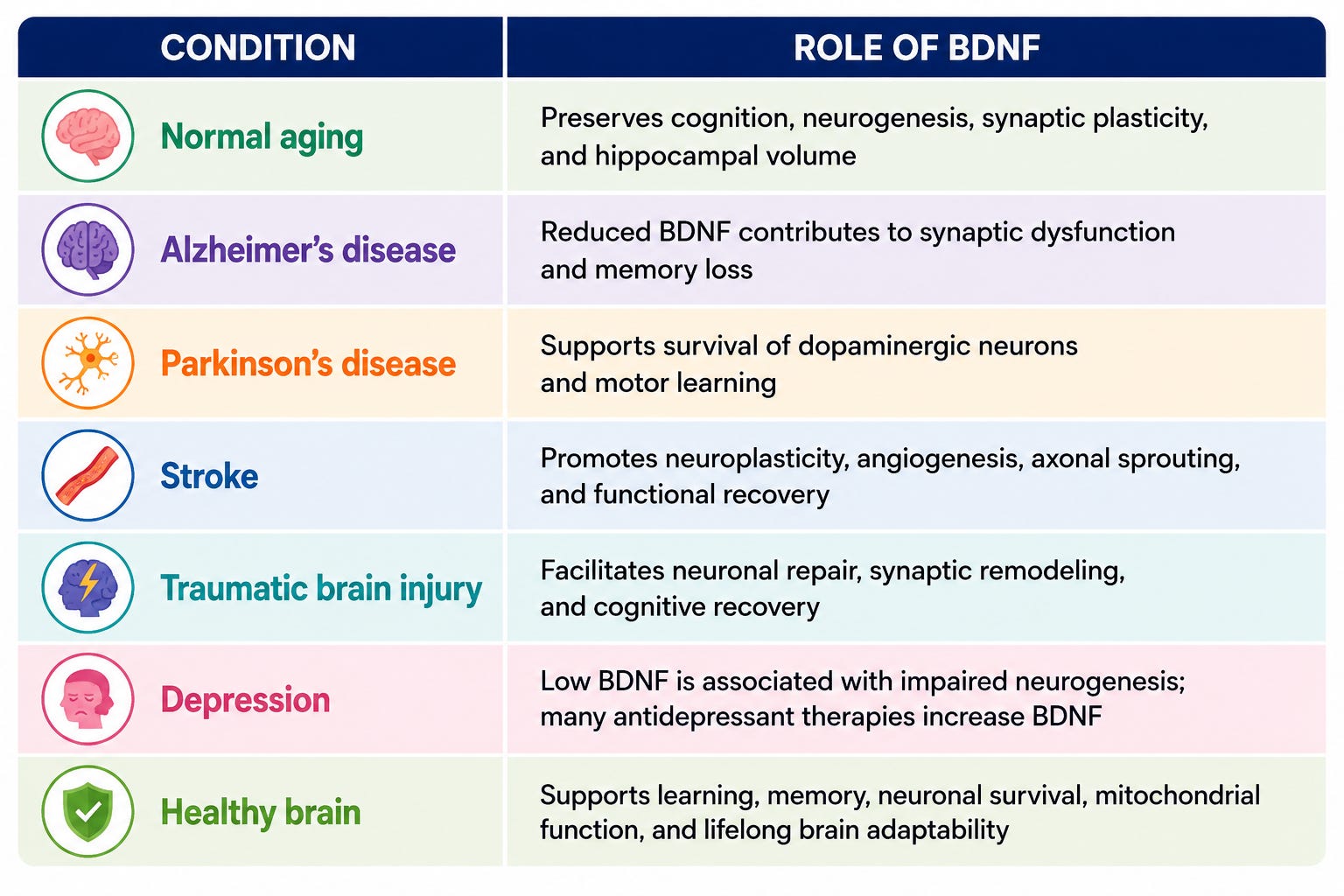
Normal aging is associated with a gradual decline in BDNF expression.
Several factors contribute:
reduced physical activity
insulin resistance
chronic inflammation
oxidative stress
mitochondrial dysfunction
vascular disease
hormonal changes
Lower BDNF levels correlate with:
slower information processing
impaired memory
reduced executive function
decreased hippocampal volume
increased frailty
Animal studies demonstrate that restoring BDNF partially reverses age-related synaptic loss and improves learning.
One reason exercise remains so effective in preserving cognition during aging is that it is among the strongest physiological stimulators of BDNF production.
BDNF and Alzheimer’s Disease
Alzheimer’s disease is characterized not only by amyloid plaques and tau tangles but also by profound synaptic failure. Long before significant neuronal death occurs, synaptic connections begin to deteriorate.
BDNF deficiency appears to play a major role in this process.
Patients with Alzheimer’s disease consistently demonstrate:
reduced hippocampal BDNF
lower cortical BDNF expression
impaired TrkB signaling
reduced synaptic plasticity
Amyloid-β and phosphorylated tau further suppress BDNF production, creating a vicious cycle:
Amyloid accumulation → reduced BDNF → synaptic dysfunction → cognitive decline → further neuronal injury.
Reduced BDNF likely contributes to memory impairment even before extensive neuronal loss becomes apparent.
BDNF and Parkinson’s Disease
BDNF is essential for the survival of dopaminergic neurons within the substantia nigra.
Reduced BDNF contributes to:
dopaminergic neuron degeneration
impaired motor learning
gait dysfunction
cognitive decline
Animal models consistently demonstrate neuroprotection when BDNF signaling is enhanced.
BDNF and Stroke
Stroke produces immediate neuronal death within the ischemic core, but the surrounding penumbra remains potentially salvageable.
BDNF becomes critically important during recovery.
It promotes:
neuronal survival
axonal sprouting
dendritic remodeling
synapse formation
cortical reorganization
angiogenesis
neurogenesis
Patients with higher post-stroke BDNF levels generally experience better functional recovery, although many factors influence prognosis.
Exercise-based rehabilitation likely derives part of its benefit from increasing BDNF during this recovery phase.
BDNF and Traumatic Brain Injury (TBI)
Following traumatic brain injury, BDNF expression initially increases as part of the endogenous repair response but often declines during the chronic phase.
Low BDNF following TBI is associated with:
persistent cognitive impairment
depression
memory loss
chronic headaches
reduced neuroplasticity
Experimental studies demonstrate that increasing BDNF after TBI:
improves neurogenesis
reduces neuronal apoptosis
enhances synaptic remodeling
improves spatial memory
accelerates functional recovery
Although no therapy currently delivers BDNF directly in clinical practice, rehabilitation strategies that increase endogenous BDNF are widely encouraged.
BDNF and Depression
Depression has become one of the best-established disorders associated with reduced BDNF.
Chronic stress elevates cortisol, suppressing hippocampal BDNF production.
This results in:
hippocampal atrophy
impaired neurogenesis
reduced synaptic connectivity
Many antidepressants—including SSRIs—as well as ketamine and electroconvulsive therapy appear to exert part of their therapeutic effect by increasing BDNF signaling.
Why Does BDNF Decline?
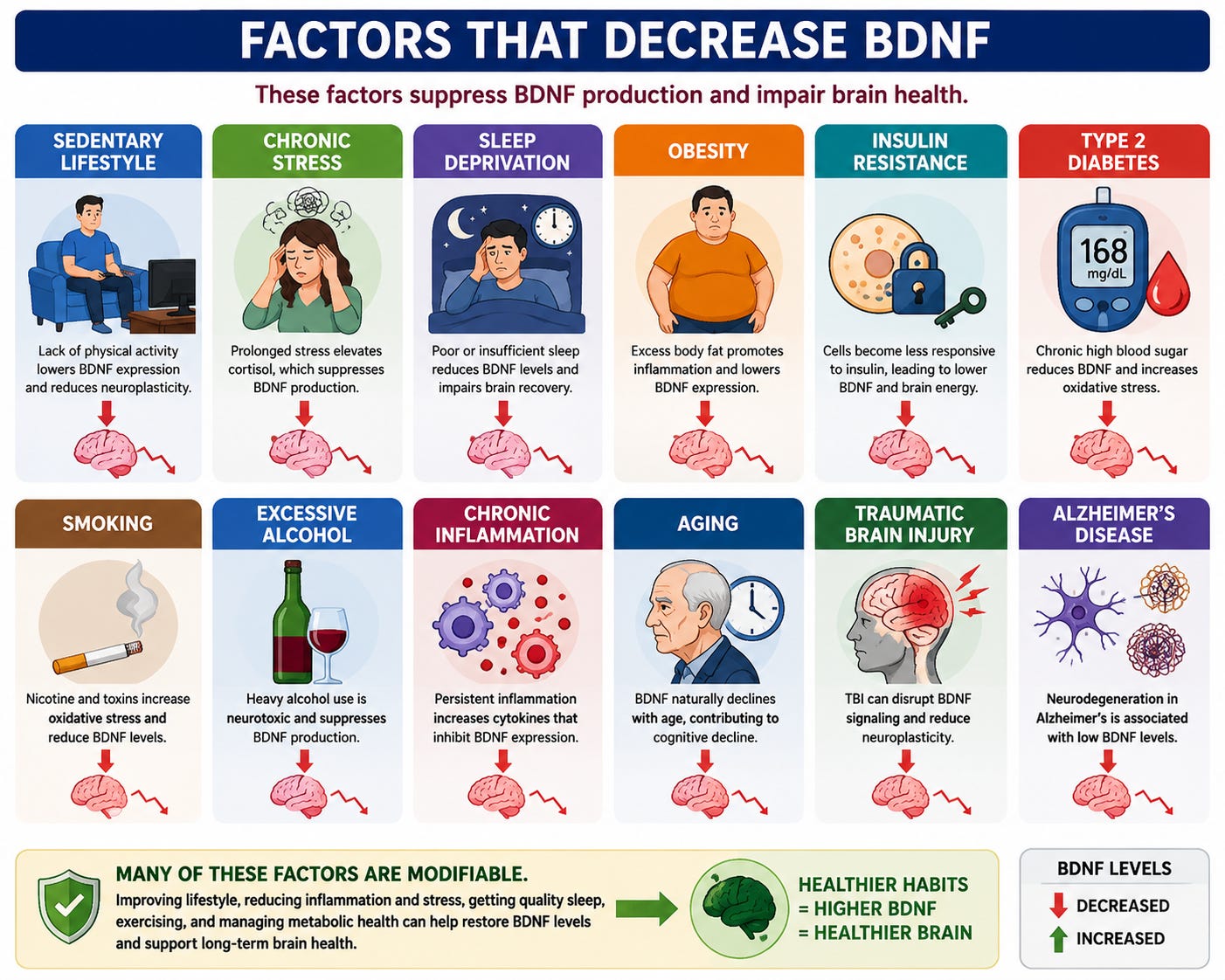
Numerous factors suppress BDNF production.
These include:
sedentary lifestyle
chronic stress
sleep deprivation
obesity
insulin resistance
type 2 diabetes
smoking
excessive alcohol
chronic inflammation
aging
traumatic brain injury
Alzheimer’s disease
Strategies That Increase BDNF
Among all known interventions, regular aerobic exercise has the strongest evidence for increasing BDNF.
Other interventions include:
Lifestyle
Aerobic exercise
High-intensity interval training (HIIT)
Resistance training
Adequate sleep
Cognitive stimulation
Learning new skills
Social engagement
Meditation and stress reduction
Intermittent fasting
Caloric restriction (in selected individuals)
Nutritional factors
Omega-3 fatty acids (especially DHA)
Curcumin
Magnesium (particularly magnesium L-threonate)
Vitamin D (if deficient)
Creatine
EGCG (green tea)
Cocoa flavanols
Blueberries and other anthocyanin-rich foods
Lion’s Mane mushroom
Melatonin
While these nutraceuticals show promise, their effects are generally modest compared with those of regular physical activity.
Pharmacologic Agents
SSRIs (Selective Serotonin Reuptake Inhibitors)
Ketamine (one of the most rapid stimulators of BDNF currently available)
Lithium
GLP-1 receptor agonists
Aerobic Exercise
Exercise is the single most effective non-pharmacologic intervention for increasing BDNF.
Mechanisms
Exercise increases:
PGC-1α
FNDC5 (irisin)
CREB activation
VEGF
Cerebral blood flow
Neurogenesis
All converge on increased BDNF transcription.
Human evidence
Repeated randomized trials demonstrate increases in circulating BDNF after:
brisk walking
cycling
running
swimming
rowing
Both acute exercise and chronic training increase BDNF.
Optimal dose
30–45 minutes
4–6 days/week
Moderate-to-vigorous intensity
Evidence: ★★★★★
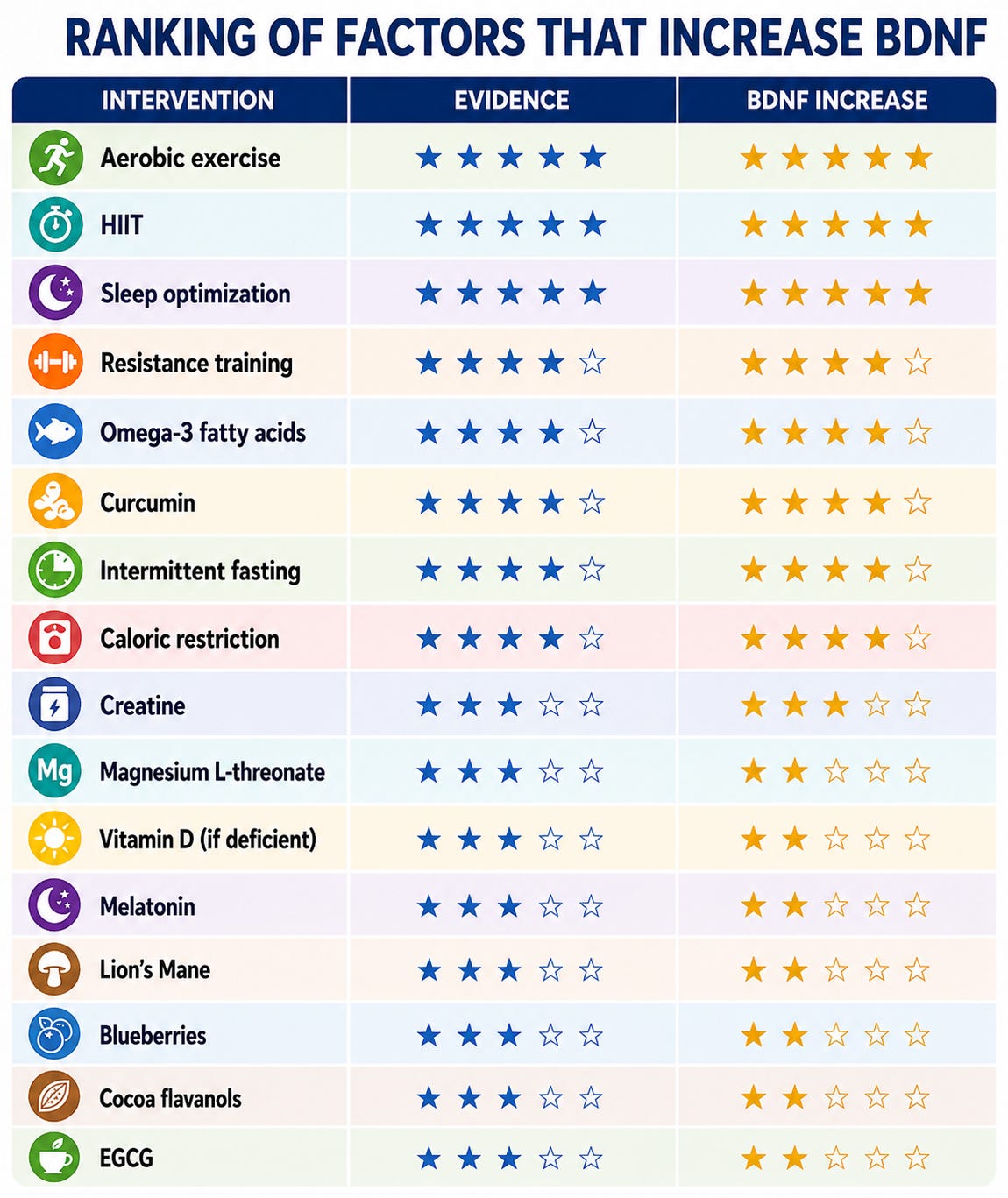
For maximizing BDNF, the greatest benefit comes from regular aerobic exercise, adequate sleep, and high-intensity interval training. Among nutritional interventions, the strongest evidence supports omega-3 fatty acids (particularly DHA), curcumin, and intermittent fasting, while creatine, magnesium L-threonate, Lion’s Mane, melatonin, blueberries, cocoa flavanols, and EGCG have moderate but encouraging evidence. Animal studies suggest additive increases in BDNF when DHA supplementation is combined with aerobic exercise. A comprehensive lifestyle approach—combining exercise, restorative sleep, a nutrient-rich diet, and correction of vitamin deficiencies—is likely to have the greatest overall impact on BDNF and long-term brain health.
BDNF and the Future of Neuroregeneration
Because BDNF influences so many aspects of neuronal health, researchers are actively exploring therapies that enhance BDNF signaling. Experimental approaches include gene therapy, stem-cell therapy, TrkB agonists, engineered BDNF mimetics, and small molecules that increase endogenous BDNF production. Although these strategies remain investigational, they hold promise for treating Alzheimer’s disease, Parkinson’s disease, stroke, traumatic brain injury, and other neurodegenerative disorders.
Clinical Significance
BDNF represents one of the central biological links between lifestyle and long-term brain health. It integrates exercise, nutrition, sleep, metabolic health, vascular function, and neuroplasticity into a unified pathway that supports neuronal survival and cognitive resilience. Declining BDNF appears to contribute to age-related cognitive decline, while preservation of BDNF signaling is associated with healthier aging and greater recovery after neurological injury.
Bottom line: BDNF is a master regulator of brain repair and resilience. Although it is not a cure for neurodegenerative disease or brain injury, maintaining robust BDNF signaling—primarily through regular exercise, restorative sleep, metabolic health, cognitive engagement, and correction of nutritional deficiencies—appears to be one of the most evidence-supported strategies for promoting healthy brain aging and optimizing recovery after neurological injury.

This is not something that a patient can do.
This is being investigated by researchers. .. its role is unclear.
Thanks for this. Most informative.