

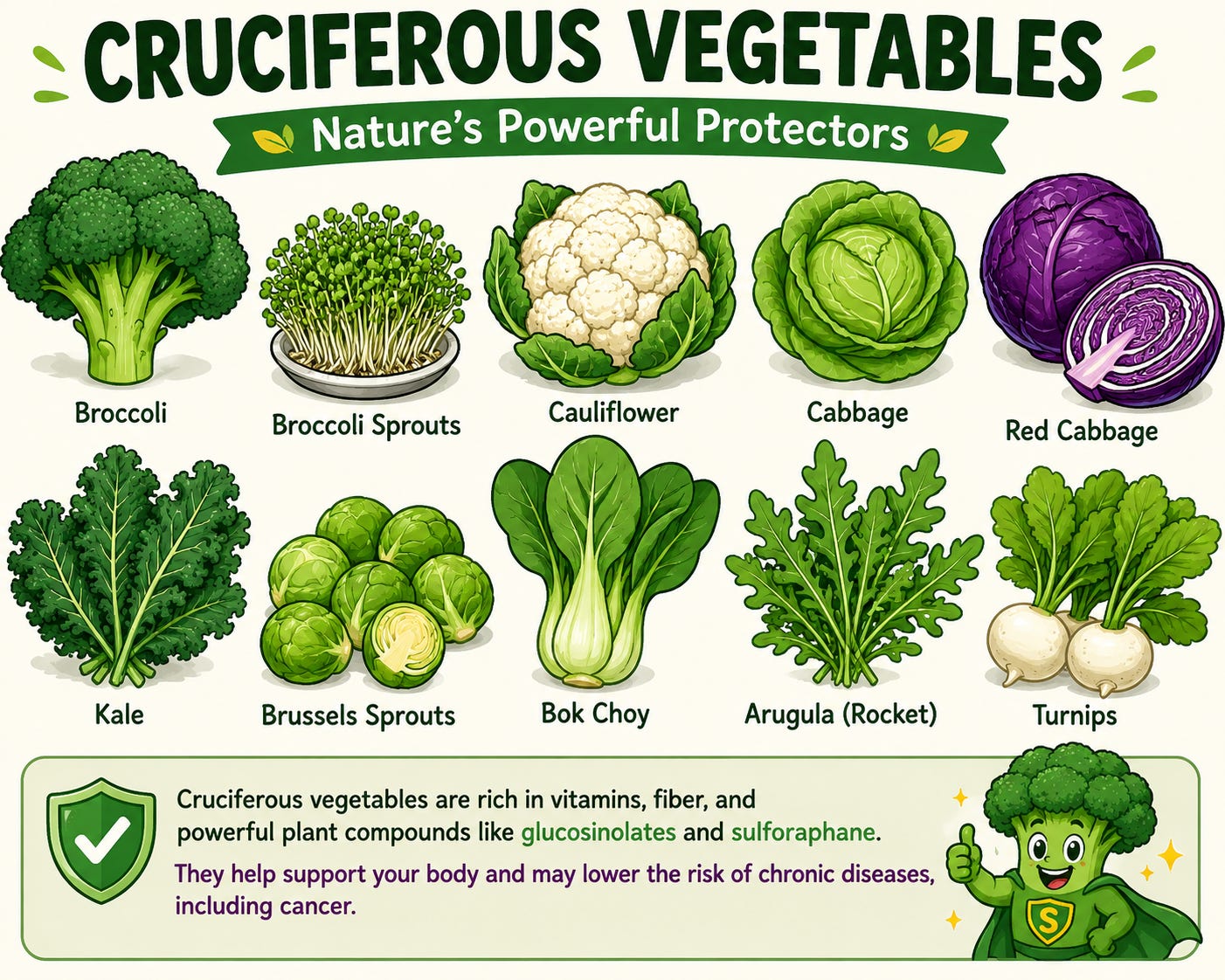
Sulforaphane (SFN) shows broad anticancer activity in cell and animal models, and early clinical studies suggest it may help reduce cancer risk or slow progression. Sulforaphane is an isothiocyanate derived mainly from glucoraphanin in broccoli, broccoli sprouts, and other cruciferous vegetables. It is considered a dietary chemo-preventive agent because it modulates detoxification, antioxidant, and cell‑regulatory pathways linked to carcinogenesis.(1)
Anticancer pathways and mechanisms
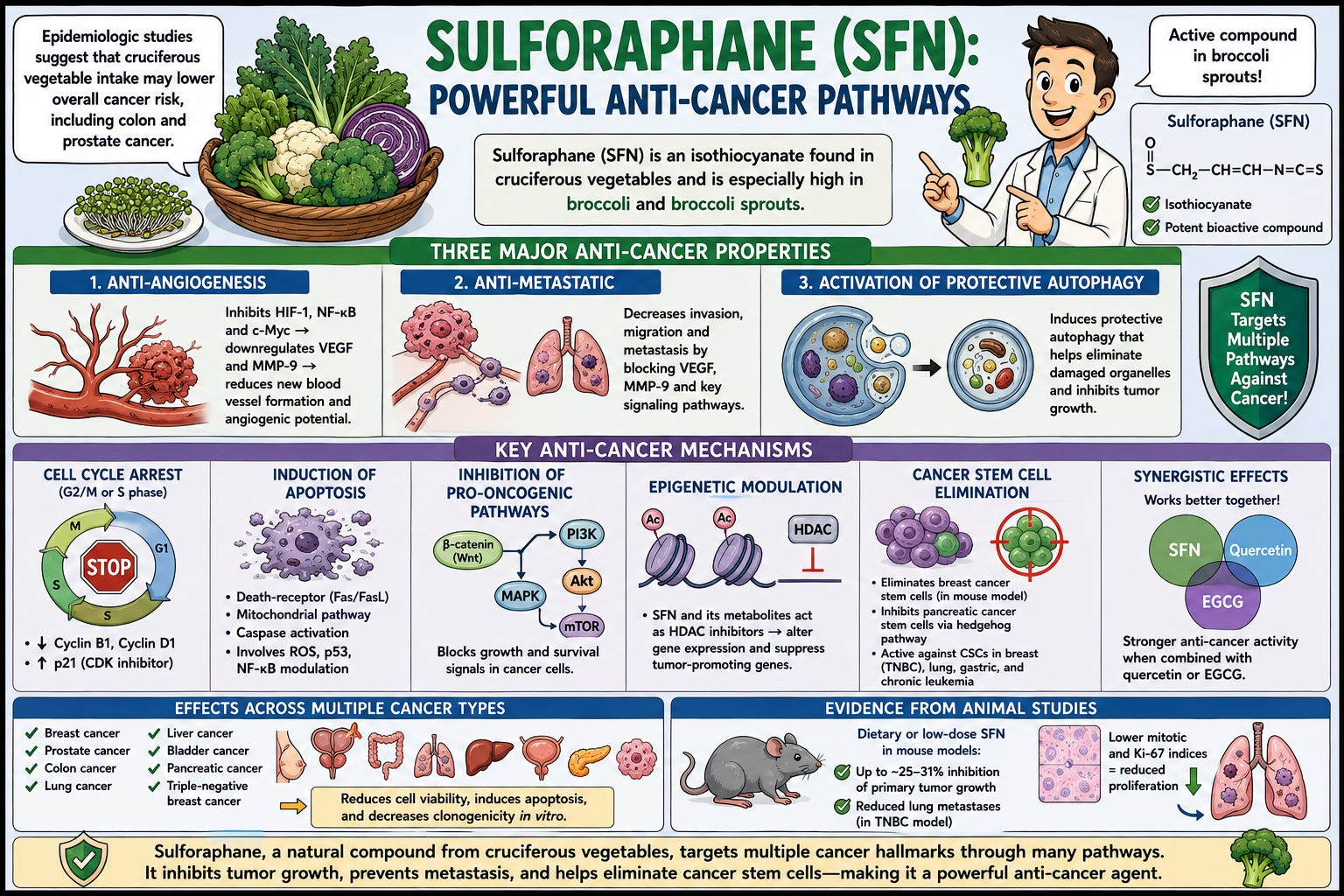
Epidemiologic studies suggest that cruciferous vegetable intake may lower overall cancer risk, including colon and prostate cancer. Sulforaphane (SFN) is an isothiocyanate found in cruciferous vegetables and is especially high in broccoli and broccoli sprouts.
The three major anti-cancer properties of sulforaphane include anti-angiogenesis, anti-metastatic and activation of protective autophagy. (1, 2) SFN inhibits cancer cell proliferation by inducing cell‑cycle arrest (commonly at G2/M or S phase) and downregulating cyclins such as cyclin B1 and cyclin D1, while upregulating the CDK inhibitor p21.(1) It triggers apoptosis via death‑receptor (Fas/FasL), mitochondrial, and caspase‑dependent pathways, often involving reactive oxygen species, p53, and NF‑κB modulation. SFN can induce autophagy and inhibit pro‑oncogenic pathways such as β‑catenin/Wnt, contributing to growth inhibition in hepatoblastoma and other tumor cells.
Sulforaphane inhibits HIF-1, NF-ƘB and proto-oncogene myc, resulting in the downregulation of key angiogenic and metastatic regulators, vascular endothelial growth factor (VEGF) and matrix metallopeptidase 9 (MMP-9) and thus the reduction of angiogenic and metastatic potential. (1, 2) In vitro experiments with sulforaphane indicate a pronounced role for cell cycle arrest in its anticancer properties. (3) Sulforaphane and its metabolites act as histone deacetylase (HDAC) inhibitors.(3) In a breast cancer mouse model sulforaphane was shown to be highly potent for the elimination of cancer stem cells. (4, 5) Sulforaphane was demonstrated to inhibit pancreatic cancer stem cells by inhibition of the sonic hedgehog pathway. (6) In preclinical in vitro and in vivo studies sulforaphane has shown activity against various cancer stem cells, including, triple negative breast cancer stem cells, lung, gastric and chronic leukemia stem cells.(7-9) SFN also modulates key pathways such as PI3K‑Akt‑mTOR, MAPK, and others, which affects proliferation, survival, angiogenesis, and metastasis.(1) Sulforaphane has synergistic anti-cancer activity with quercetin and EGCG (see Figure 1).(10, 11)
Across many cancer types (breast, prostate, colon, lung, liver, bladder, pancreatic, and triple‑negative breast cancer), SFN reduces cell viability, induces apoptosis, and decreases clonogenicity in vitro.(12) In mouse models, dietary or low‑dose SFN has produced up to about 25–31% inhibition of primary tumor growth and reduced lung metastases in triple‑negative breast cancer, with lower mitotic and Ki‑67 indices indicating reduced proliferation. (12)
Figure 1. Anticancer pathways of sulforaphane
Preclinical studies show sulforaphane can sensitize tumor cells to chemotherapy (cisplatin, doxorubicin, imatinib, sorafenib) and reduce invasion, migration, and metastasis, while sparing normal cells.(13) In animal models, combining sulforaphane with cytotoxic drugs enhances apoptosis, targets cancer stem‑like cells, and sometimes allows lower chemo doses without losing efficacy.(14)
Clinical studies
While the anticancer activity of sulforaphane has been established in many experimental models, clinical studies evaluating efficacy are limited. Cipolla performed a double-blind RCT in 78 males with rising PSA after radical prostatectomy for prostate cancer.(15) Treatment consisted of 60 mg sulforaphane for 6 months over which time the sulforaphane group had a mean increase in PSA of 0.01 ng/ml compared to a 0.62 ng/ml increase for placebo. PSA doubling time in the sulforaphane group was 28.9 months compared to 15.5 months for the placebo group. Sulforaphane prolonged PSA doubling time, thus delaying “biochemical recurrence”. These findings were not replicated in men with metastatic prostate cancer.(16) A 2025 randomized phase II trial in former smokers reported that 12‑month oral SFN supplementation significantly reduced the Ki‑67 proliferation index in the bronchial epithelium, suggesting lowered lung cancer risk markers. (17)
Sulforaphane Supplementation: Challenges and Commercial Formulations
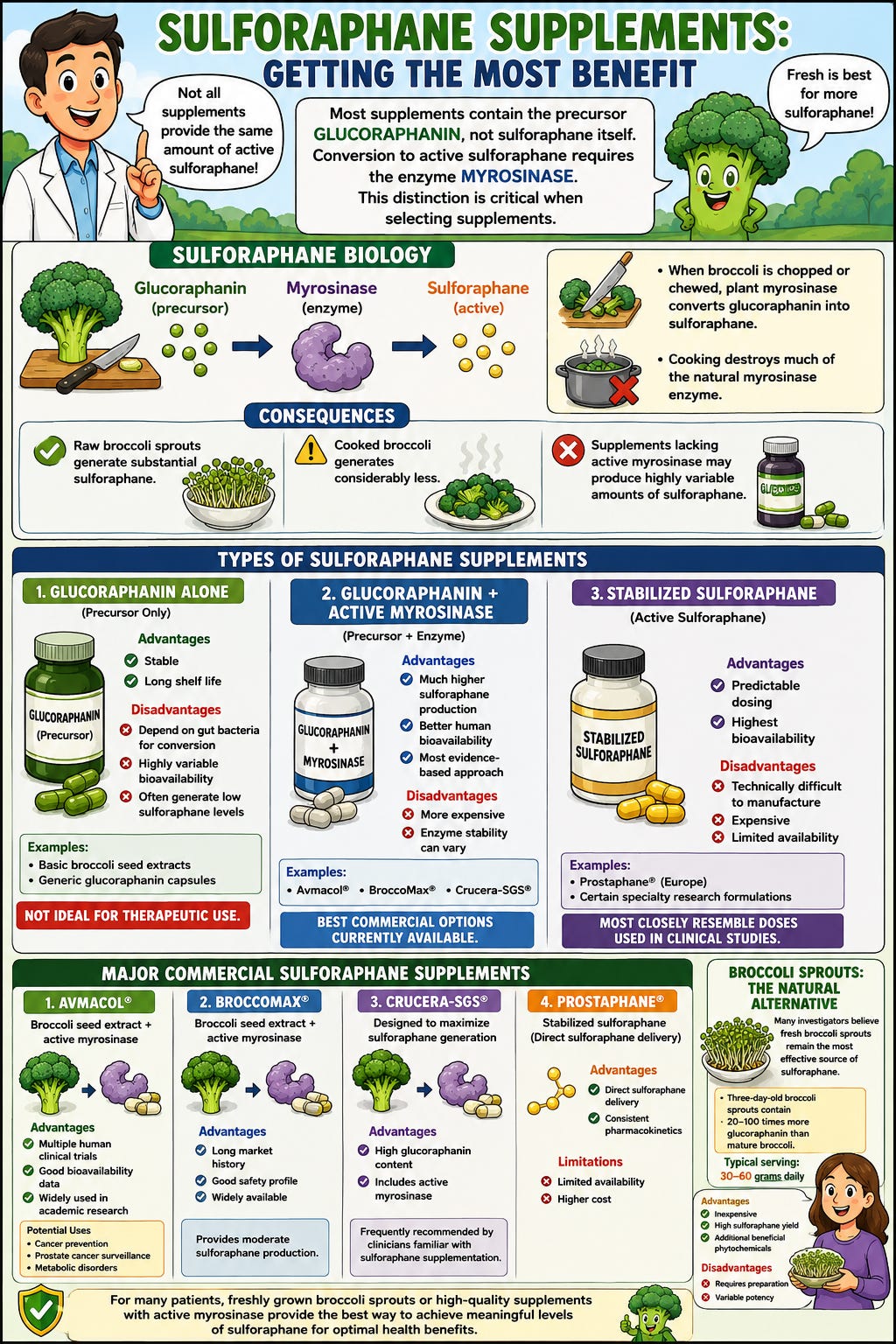
Although sulforaphane is one of the most extensively studied anticancer phytochemicals, achieving therapeutically meaningful exposure is more complex than is often appreciated. A common misconception is that all broccoli-derived supplements provide comparable amounts of sulforaphane. In reality, most commercial products do not contain sulforaphane itself but rather glucoraphanin, its inactive precursor. The conversion of glucoraphanin into biologically active sulforaphane requires the enzyme myrosinase, making the presence or absence of this enzyme a critical determinant of supplement efficacy.
The biochemical pathway is straightforward: glucoraphanin is converted to sulforaphane through enzymatic hydrolysis by myrosinase. In nature, this conversion occurs when cruciferous vegetables are chopped, crushed, or chewed, allowing plant myrosinase to come into contact with glucoraphanin stored in adjacent cellular compartments. Unfortunately, myrosinase is heat-sensitive and is largely destroyed by conventional cooking. Consequently, raw cruciferous vegetables and broccoli sprouts generate substantially higher amounts of sulforaphane than cooked vegetables. Similarly, supplements that contain glucoraphanin without active myrosinase often produce inconsistent and unpredictable sulforaphane levels because they rely on variable conversion by intestinal microbiota.
Commercial sulforaphane products can be broadly divided into three categories. The first consists of supplements containing glucoraphanin alone. These products are chemically stable and have a long shelf life, but their clinical utility is limited by poor and highly variable conversion to sulforaphane. Since activation depends largely on the composition and metabolic activity of the individual’s gut microbiome, bioavailability can vary considerably between users. Many generic broccoli seed extracts and glucoraphanin capsules fall into this category. While these products may contribute to overall dietary intake of glucoraphanin, they are generally not considered optimal for therapeutic applications.
A second category consists of formulations that combine glucoraphanin with active myrosinase. By providing both the substrate and the enzyme required for activation, these products generate substantially higher sulforaphane levels and demonstrate superior bioavailability in human studies. Although they tend to be more expensive and enzyme stability remains a formulation challenge, they currently represent the most evidence-based commercial approach to sulforaphane supplementation. Examples include Avmacol®, BroccoMax®, and Crucera-SGS®. These products have been widely used in clinical research and are generally regarded as the preferred option for individuals seeking reliable sulforaphane exposure.
A third category includes stabilized sulforaphane formulations that contain sulforaphane itself rather than its precursor. These products provide the most predictable pharmacokinetics and the highest bioavailability because they bypass the need for enzymatic conversion. However, sulforaphane is inherently unstable, making manufacturing technically challenging and increasing production costs. Consequently, stabilized sulforaphane products remain relatively uncommon. Prostaphane®, developed in Europe, is among the best-known examples and most closely approximates the formulations used in many clinical investigations.
Among commercially available products, Avmacol® has accumulated perhaps the largest body of human clinical data. Produced from broccoli seed extract combined with active myrosinase, it has been evaluated in multiple clinical studies and has demonstrated favorable bioavailability. Research has explored its potential role in cancer prevention, prostate cancer surveillance, and metabolic disorders. BroccoMax® similarly combines broccoli seed extract with active myrosinase and has a long history of commercial availability, an excellent safety profile, and broad consumer access. Crucera-SGS® was specifically designed to maximize sulforaphane generation and contains high concentrations of glucoraphanin together with active myrosinase, making it a popular choice among clinicians familiar with sulforaphane supplementation. Prostaphane® differs from these products by providing stabilized sulforaphane directly, resulting in consistent pharmacokinetic properties but at higher cost and with more limited availability.
Despite the growing availability of specialized supplements, many investigators continue to regard fresh broccoli sprouts as the most effective natural source of sulforaphane. Three-day-old broccoli sprouts contain extraordinarily high concentrations of glucoraphanin—often 20 to 100 times higher than mature broccoli. When consumed raw, these sprouts provide both glucoraphanin and naturally occurring myrosinase, resulting in efficient sulforaphane production. Typical daily intakes range from approximately 30 to 60 grams. Broccoli sprouts offer several advantages, including low cost, high sulforaphane yield, and the presence of numerous additional phytochemicals that may act synergistically. Their principal limitations are the need for preparation, variable potency between batches, and the inconvenience associated with regular cultivation or procurement.
For many individuals, freshly grown broccoli sprouts may provide greater sulforaphane exposure than most commercial supplements. Consequently, broccoli sprouts should be viewed not merely as a dietary source of sulforaphane but as a practical and highly effective delivery system for one of nature’s most potent anticancer phytochemicals.
If you’ve found this work valuable, please consider upgrading to a paid subscription. Your support helps me continue independent research and share practical, evolving insights—while giving you access to deeper content and more direct engagement.
If you found this article helpful, please restack it to help others discover the Cancer & Metabolic Healing Playbook.
Medical Disclaimer: The discussion of repurposed medications and nutraceuticals in this article is intended to review the scientific literature and does not constitute a recommendation for self-treatment. Decisions regarding the use of off-label therapies should be made in consultation with a qualified healthcare professional familiar with the patient’s medical history and current treatment plan. Please see the full Medical Disclaimer on the introductory page to Marik’s Cancer & Metabolic Healing Playbook.

References
1. Asif Ali M, Khan N, Kaleem N, Ahmad W, Alharethi SH, Alharbi B, et al. Anticancer properties of sulforaphane: current insights at the molecular level. Front Oncol. 2023;13:1168321.
2. Bayat Mokhtari R, Baluch N, Homayouni TS, Morgatskaya E, Kumar S, Kazemi P, et al. The role of Sulforaphane in cancer chemoprevention and health benefits: a mini-review. J Cell Commun Signal. 2018;12(1):91–101.
3. Clarke JD, Dashwood RH, Ho E. Multi-targeted prevention of cancer by sulforaphane. Cancer Lett. 2008;269(2):291–304.
4. Li Y, Zhang T. Targeting cancer stem cells with sulforaphane, a dietary component from broccoli and broccoli sprouts. Future Oncol. 2013;9(8):1097–103.
5. Li Y, Zhang T, Korkaya H, Liu S, Lee HF, Newman B, et al. Sulforaphane, a dietary component of broccoli/broccoli sprouts, inhibits breast cancer stem cells. Clin Cancer Res. 2010;16(9):2580–90.
6. Rodova M, Fu J, Watkins DN, Srivastava RK, Shankar S. Sonic hedgehog signaling inhibition provides opportunities for targeted therapy by sulforaphane in regulating pancreatic cancer stem cell self-renewal. PLoS One. 2012;7(9):e46083.
7. Ge M, Zhang L, Cao L, Xie C, Li X, Li Y, et al. Sulforaphane inhibits gastric cancer stem cells via suppressing sonic hedgehog pathway. Int J Food Sci Nutr. 2019;70(5):570–8.
8. Burnett JP, Lim G, Li Y, Shah RB, Lim R, Paholak HJ, et al. Sulforaphane enhances the anticancer activity of taxanes against triple negative breast cancer by killing cancer stem cells. Cancer Lett. 2017;394:52–64.
9. Castro NP, Rangel MC, Merchant AS, MacKinnon G, Cuttitta F, Salomon DS, et al. Sulforaphane Suppresses the Growth of Triple-negative Breast Cancer Stem-like Cells In vitro and In vivo. Cancer Prev Res (Phila). 2019;12(3):147–58.
10. Srivastava RK, Tang SN, Zhu W, Meeker D, Shankar S. Sulforaphane synergizes with quercetin to inhibit self-renewal capacity of pancreatic cancer stem cells. Front Biosci (Elite Ed). 2011;3(2):515–28.
11. Chen H, Landen CN, Li Y, Alvarez RD, Tollefsbol TO. Epigallocatechin gallate and sulforaphane combination treatment induce apoptosis in paclitaxel-resistant ovarian cancer cells through hTERT and Bcl-2 down-regulation. Exp Cell Res. 2013;319(5):697–706.
12. Pogorzelska A, Świtalska M, Wietrzyk J, Mazur M, Milczarek M, Medyńska K, et al. Antitumor and antimetastatic effects of dietary sulforaphane in a triple-negative breast cancer models. Sci Rep. 2024;14(1):16016.
13. Sailo BL, Liu L, Chauhan S, Girisa S, Hegde M, Liang L, et al. Harnessing Sulforaphane Potential as a Chemosensitizing Agent: A Comprehensive Review. Cancers (Basel). 2024;16(2).
14. Wang X, Li Y, Dai Y, Liu Q, Ning S, Liu J, et al. Sulforaphane improves chemotherapy efficacy by targeting cancer stem cell-like properties via the miR-124/IL-6R/STAT3 axis. Sci Rep. 2016;6:36796.
15. Cipolla BG, Mandron E, Lefort JM, Coadou Y, Della Negra E, Corbel L, et al. Effect of Sulforaphane in Men with Biochemical Recurrence after Radical Prostatectomy. Cancer Prev Res (Phila). 2015;8(8):712–9.
16. Alumkal JJ, Slottke R, Schwartzman J, Cherala G, Munar M, Graff JN, et al. A phase II study of sulforaphane-rich broccoli sprout extracts in men with recurrent prostate cancer. Invest New Drugs. 2015;33(2):480–9.
17. Yuan JM, Kensler TW, Dacic S, Hartman DJ, Wang R, Balogh PA, et al. Randomized Phase II Clinical Trial of Sulforaphane in Former Smokers at High Risk for Lung Cancer. Cancer Prev Res (Phila). 2025;18(6):335–45.
18. Clarke JD, Hsu A, Riedl K, Bella D, Stevens JF, Ho E. Bioavailability and inter-conversion of sulforaphane and erucin in human subjects consuming broccoli sprouts or broccoli supplement in a cross-over study design. Pharmacol. Res. 2011;64:456–63.
19. Khandouzi N, Shidfar F, Rajab A, Rahideh T, Hosseini P, Taheri MM. The effects of Ginger on fasting blood sugar, hemoglobin A1C, Apolipoprotein B, Apolipoprotein A-1 and malondialdehyde in type 2 diabetic patients. Iranian Journal of Pharmaceutical Research. 2015;14:131–40.
Yes it can cause any medical condition you name. The medical profession has no effective method of removing spike. The best is a combination of ivermectin, nattokinase, bromelian and curcumin
Thanks my friend for you thoughtful comments.